




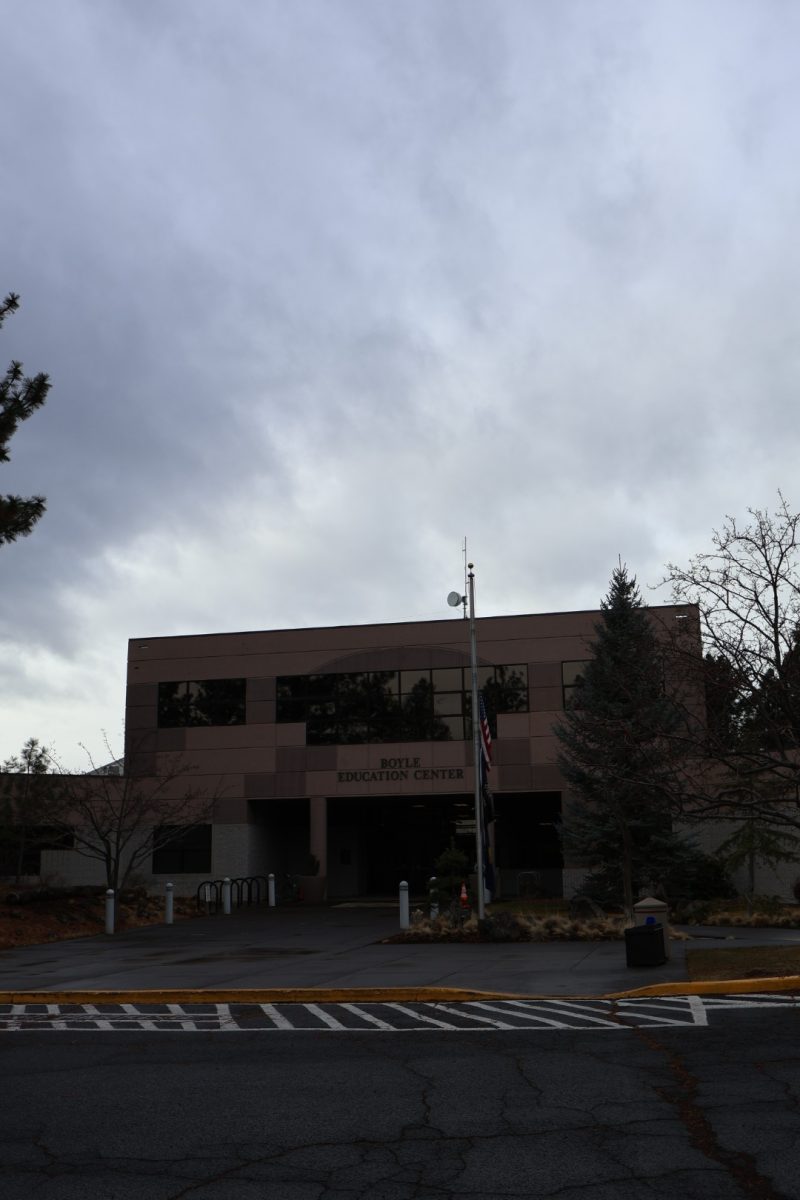




















































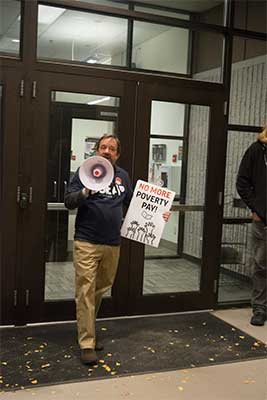
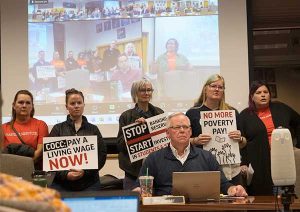
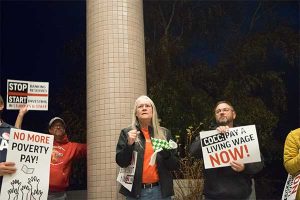

On Wednesday night, Nov. 12, the Classified Association of Central Oregon Community College union members, along with some faculty members who supported their cause, protested outside the Boyle Education Center, at the campus in Bend. The reason: income inequality.
Scott Dove, president of CACOCC, explained, “we are in contracting negotiations with the college, and we are trying to win ourselves a contract that would allow the people that are helping to build this community to actually afford to live here … many of our classified staff are having to work multiple jobs or are facing food insecurity, are houseless.”
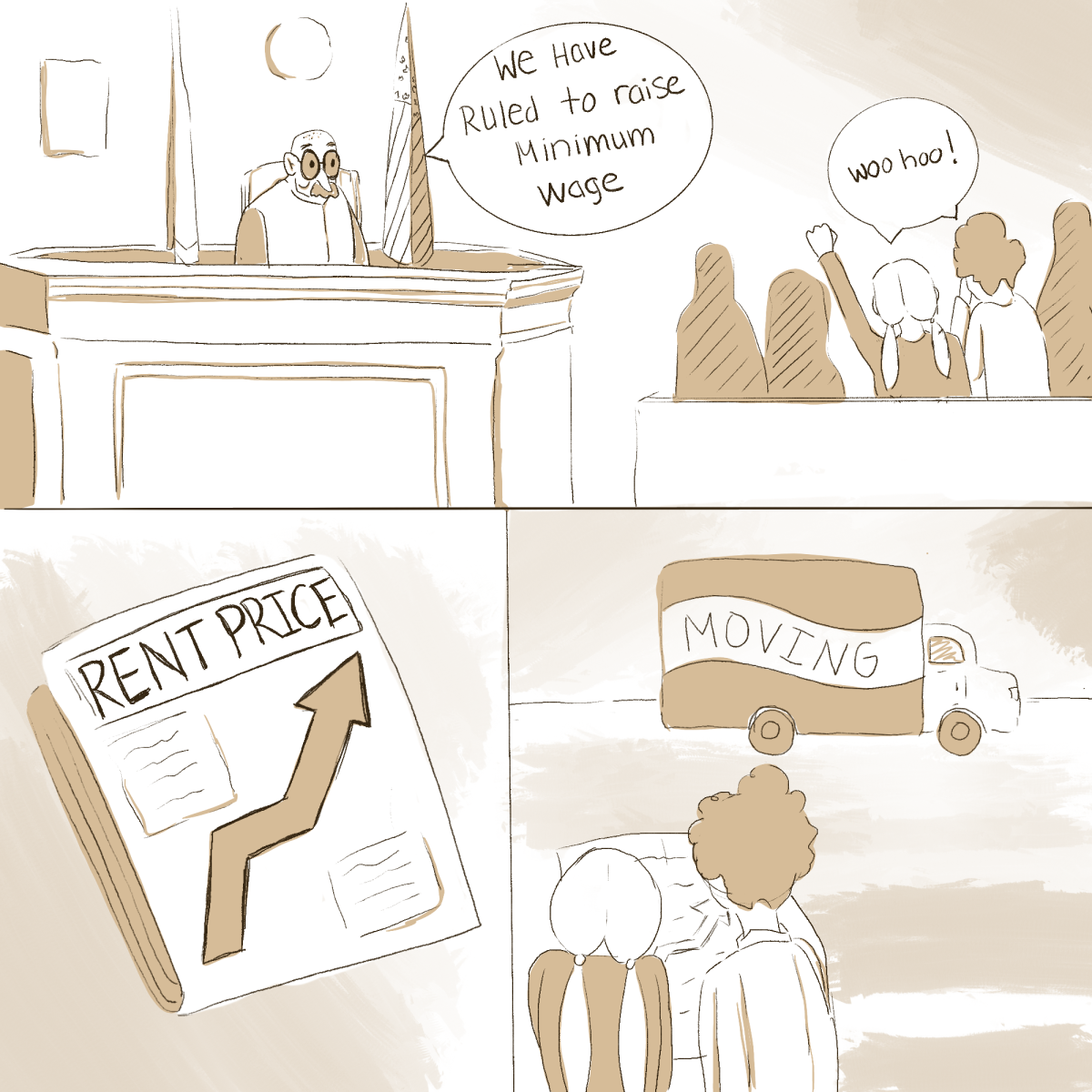
Classified staff are the support system of the college from administrative assistants to custodians; they are some of the first people students interact with when registering for a class, seeking information technology support. The lowest paid classified employees earn $18 per hour. According to Massachusetts Institute of Technology’s living wage calculator, a single adult with no kids in Deschutes County needs to earn a minimum of $25.52 per hour. For a family of four, with two kids, each adult needs to make 32.38 per hour to be considered a living wage. The college’s proposal is a 3.5 percent pay increase across a four-year period.
“It’s not even going to keep up with inflation … we need much more than that and we need to be able to afford to live in this community,” said Dove.
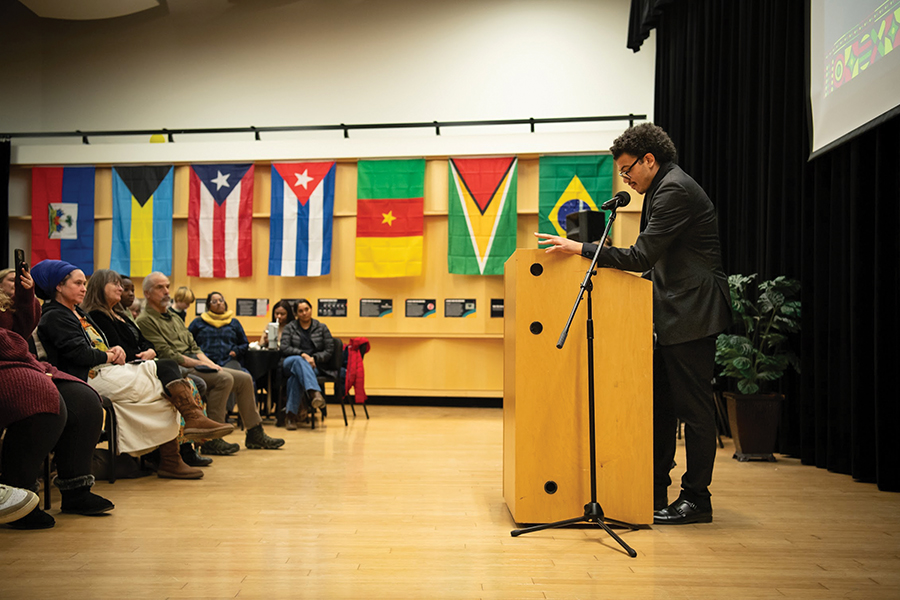
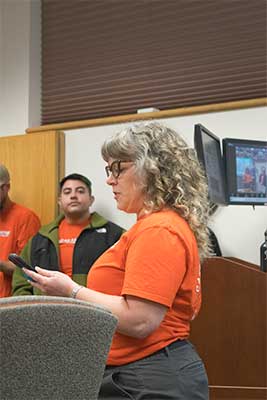
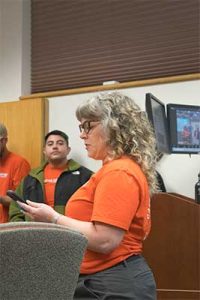
Along with the outside protests, many of the demonstrators addressed their concerns at the COCC board of directors meeting inside Boyle Education Center. The first to speak at the public comment session was Sara Henson, president of the faculty forum, the union representing COCC faculty. Henson spoke in support of classified staff. Henson said since she started working at COCC in the early 2000s, there has been a “gap between the salaries paid in Central Oregon and the cost of living here.” Henson shared salary data from 2024 that put COCC employees at the bottom of the pay scale when compared to Oregon State University-Cascades, Mount Hood Community College and Bend La-Pine schools.
Henson also noted that even though the college has focused on buildings in the past; that the new focus should be on the individuals who reside/work in those establishments. “It is going to be difficult for us to be a first choice college for students if we are not a first choice college for our employees,” Henson said in her closing statement to the board.
Liz Patterson, a data specialist at COCC and lead negotiator for bargaining and vice president of business affairs for CACOCC, shared her story about struggling with food insecurity while working a second job to keep afloat. Patterson asked why the college, which is projected to have higher state revenue, was hoarding monetary reserves, while classified staff is on the brink of homelessness and food insecurity.
Patterson explained to board members that “this isn’t a problem for classified staff. It’s a student problem and a threat to the quality of education at this college.”
She emphasized that classified staff play an integral role in student success, from custodians who keep spaces clean to information technologists who keep online services running. Patterson also noted that the college has plenty of reserves and state revenue so that the support staff can escape from poverty with living wages, while also improving student outcomes. She asked the board to put people first and realign its goals and objectives with the college’s mission and values.
Patterson said in a separate interview, that the classifieds current staff’s contract had expired July 1, and that they had been in negotiations since February of this year. Contract negotiations between both parties have been on good terms, and each side has clear and defined terms.
She also mentioned that she wanted the community to be aware of how their property taxes are being spent since the college receives about $20 million in property taxes from Deschutes County. The college is “saying they’re saving it for a rainy day, but it’s been a rainy day for decades for our employees.”
Others spoke including Allison Dickerson, a former president of CACOCC. Dickerson, a foundation and advanced data specialist, and a COCC alumna, said the board needs to understand the consequences of its low pay scale. Dickerson began her career at the college as a temporary worker and chose to continue working at the college because of its purpose, students, and people who work here.
She said her salary doesn’t reflect her hard work and dedication, nor the value that she and other classified staff bring to COCC. Dickerson said she works a second part-time job, while balancing a household with children with cognitive disabilities and had to take three months off for mental, emotional and physical well-being. Recently, Dickerson’s partner was laid off due to federal cuts. Now they both work part-time at COCC.
Other classified staff, like Courtney Nolta, Jen Chance, Joe Karli, Linda Rodriguez, or faculty members like Carol Higginbotham who publicly commented had either been COCC students themselves, or long time employees of the college each with their own personal stories, struggles, and/or supportive perspectives on the situation.
In a separate interview, with Central Oregon Community College’s board chair, Erica Skatvold, said, “I think right now, there are lots of conversations about where wages should fall, just in general with the current issues we’re all facing. I think that the classified staff are vital to COCC. When it comes to doing the work that supports our mission, I think that we’ve been in the process of good faith negotiations and we’re hoping to come to an agreement.”
Along with the classified staff and living-wage issues facing Central Oregonians, the college has also had state and federal funding cuts recently, which creates another barrier in terms of finances. Skatvold also mentioned that community, COCC employee, and student feedback is always appreciated by the board of directors.