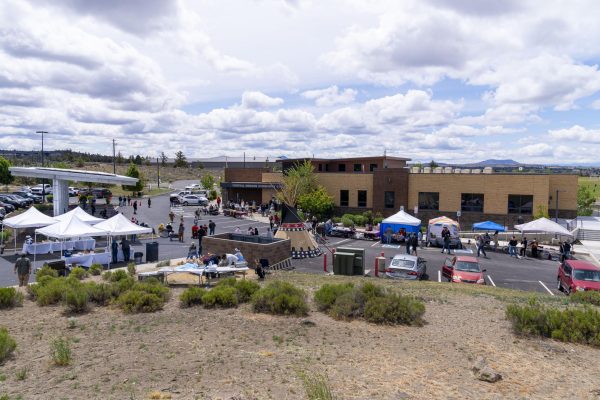



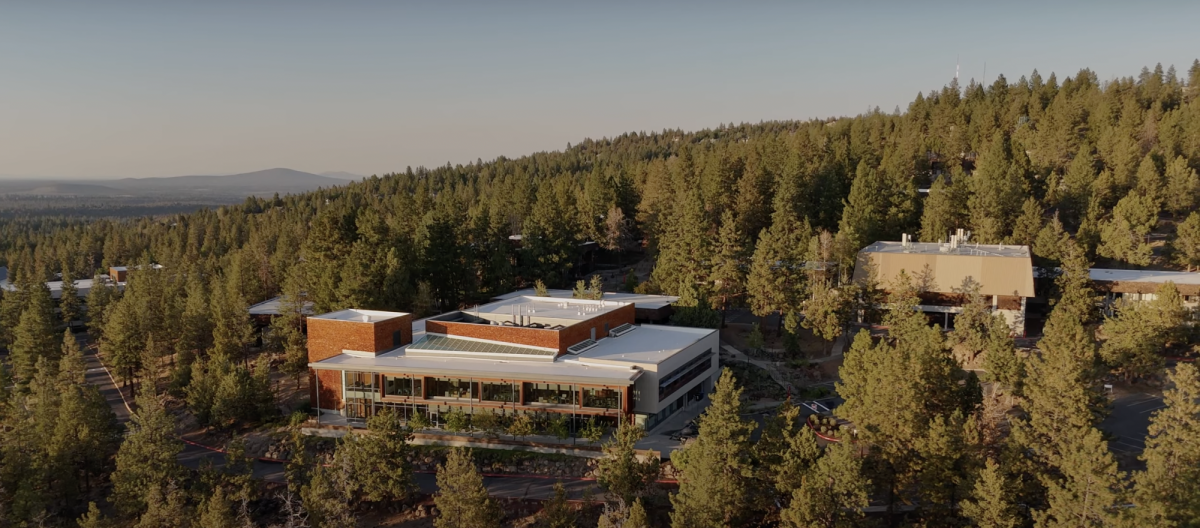



































On Saturday, May 16, Central Oregon Community College’s traditional 26th annual Salmon Bake was held in Madras this year, four-years since it was previously held there in 2022. It took place outside of the entrance of the newly renovated campus. This years’ celebration focused on indigenous culture, and youth, which ran from 11 a.m. to 1:30 p.m. Like any other previous tradition it featured salmon (Nusuxx) from the Columbia River (Wykanush) and frybread, a local and participant favorite.
For those who aren’t familiar with what the COCC Salmon Bake event is about, Jeremiah Rector, Native American student program coordinator and one of the primary organizers of the event sums it up as a celebration of and to “highlight indigenous culture.”
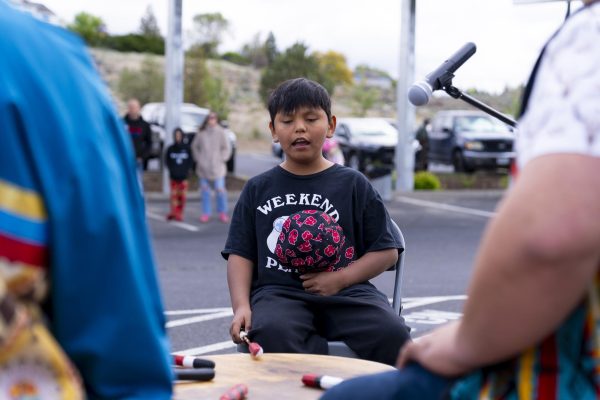
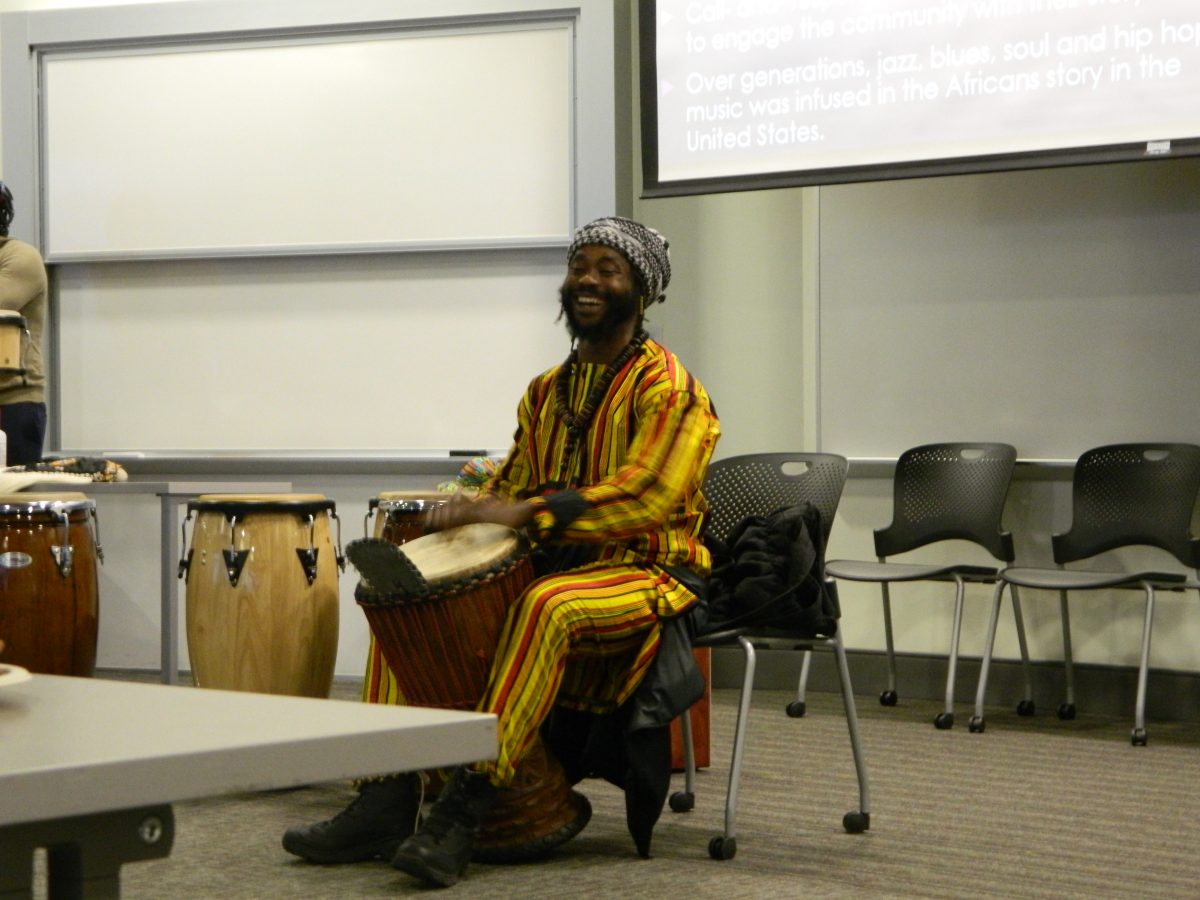
The festive events featured Powwow drumming by the Warm Springs K-8 Dance and Drum led by Gavin Begay with four youth drummers, singers and dancers. They showcased their talents to an audience of friends, family and community of the Warm Springs, Paiute and Wasco tribes. Other notable dance and singing performances were by the Madras High School’s Grupo Folklorico el Sol group who shared their culture and dancing. This style of dancing has its origins in Latin culture and regions of Mexico and carries with it a sense of vibrance and color. On the indigenous music front, Grammy and Native American Music Award flutist: James Edmund Greeley, of the Hopi, Nez Perce, and Warm Springs tribes, played a variety of songs and drummed with the K-8 Dance and Drum group in an earlier performance.
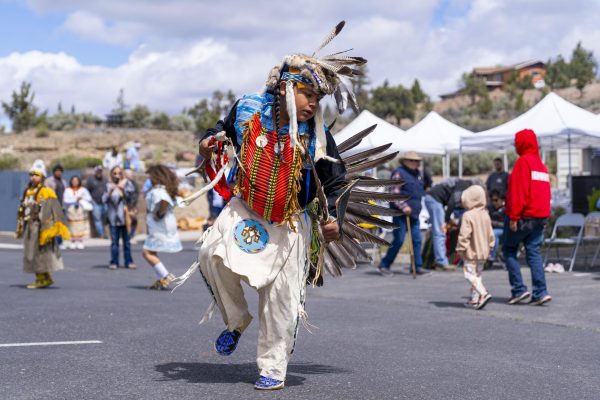
Each of the performances brought a sense of respect, kindness, and kinship from the audience. Several traditional dances and drumming from the K-8 group ranged from a Warrior’s Dance from the Sioux people of the Lakota nation to a healing dance, Jingle Dress Dance, from the Great Lakes region.
Begay, a singer and drummer, gave an in-depth explanation behind the meanings of traditional dances. “Warrior Dance”, “(it) was popular amongst all tribes to showcase the warriors that went on to provide, to go into battle, to hunt buffalo and provide for the camps that were going on. “The Women’s Traditional” was a dance that was original to honor our matriarchs, our mothers, our sisters, our women, because they are providers, they give all life. It was the first dance, because before they never used to dance, they’d (women would) stand on the side.”
The last dance was the “Ladies Fancy.” Begay went on to explain that it was a type of competitive dance that began with the boys and later migrated to women and girls who could dance just as well.
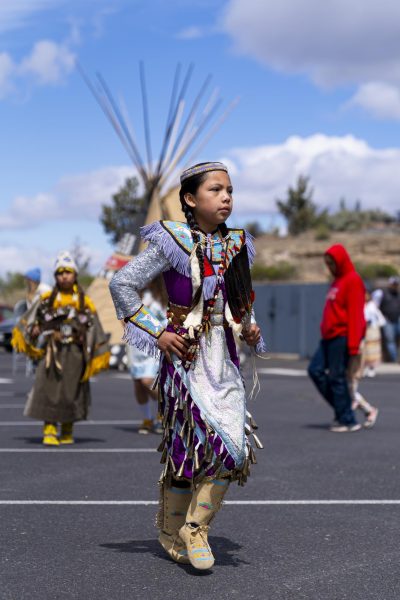
One of the audience members, Stephina Brewer, who teaches GED and English Language Learning in Madras, Warm Springs, Redmond and Bend, shared thoughts on the dances from Nicaragua and Mexico. “I love how every state of Mexico has their own dance. Like Guadalajara, Jalisco, they have the big curly skirts, and what we saw was not from Oaxaca, it’s actually from Veracruz, which is a coastal city, the one with the black apron, but they do dance with a candle on top of their head.”
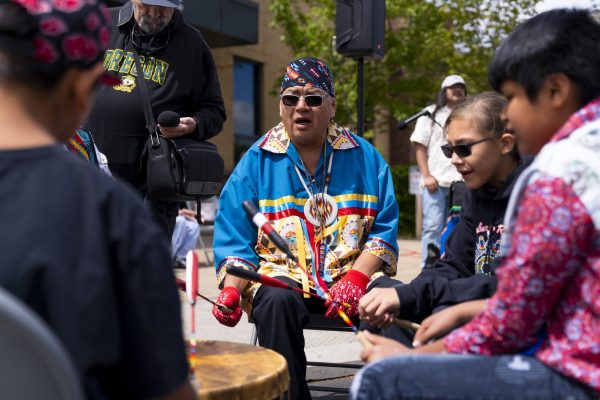
A performer from the Grupo Folklorico el Sol, Alma Nunez, explained that their performance was from their Nicaraguan culture, and one of the messages that Nunez hoped to convey to others was that everybody should share their culture and get along with one another.
To understand the cultural and indigenous significance of the salmon, a few tribal members gave permission to share insight into their culture.
Begay said:
”Salmon is one of the first foods for my people, so I always appreciate it. It’s always nice to have to eat and it’s very nurturing to our body”
Marjorie Kalama added:
“Salmon is a history of our life. It was there to feed us from the Creator. It was a gift for our people and we treat it as a gift and we’re thankful for the gift that was given to our people to survive. Salmon is everything to us, along with the deer, the elk, and all the nature provided us through the Creator.”
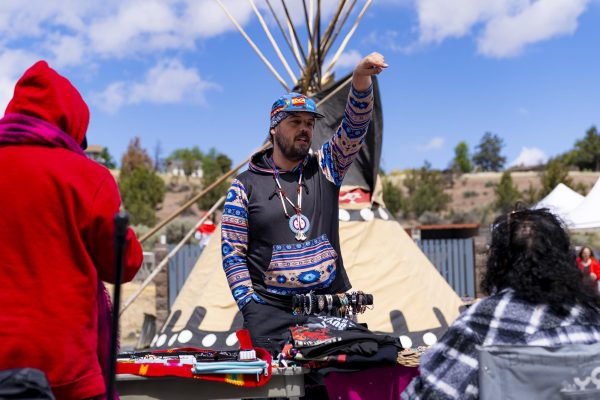
Austin Greene, who goes by the Native American name Mustalik, said:
“In our language it’s Wakanish (corrected as: Nusuxx?), and it’s basically our first foods. So it’s important, along with the roots, the salmon, the berries. So that’s kind of the order that we go in.”
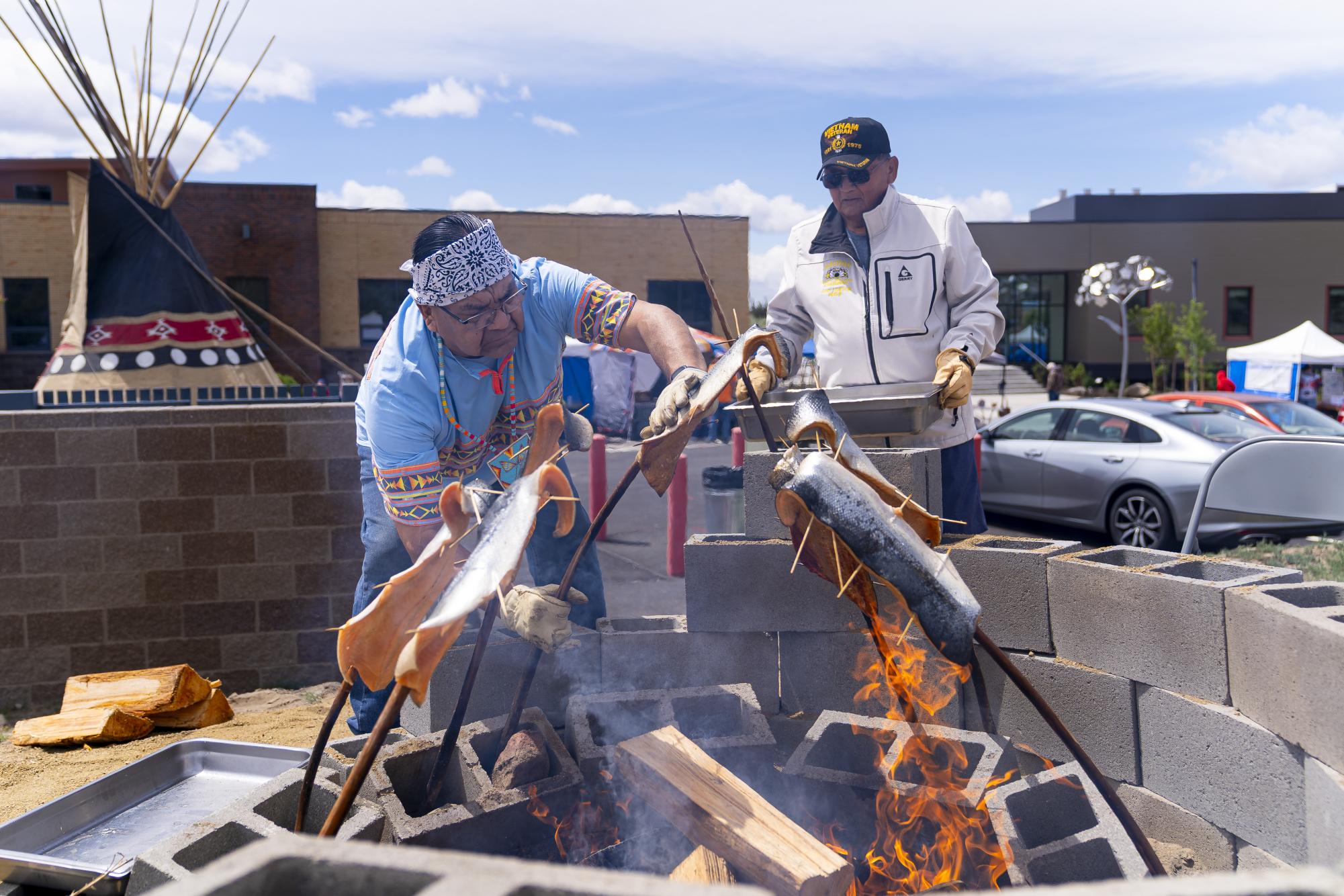
The salmon is cooked across a 12 foot diameter pit, with a depth of 12.5 feet. Each Chinook salmon averages about 2 feet in length, about 6 inches across and has a thickness of 2 to 3 inches according to Rector. In total 150 pounds were provided for this event.
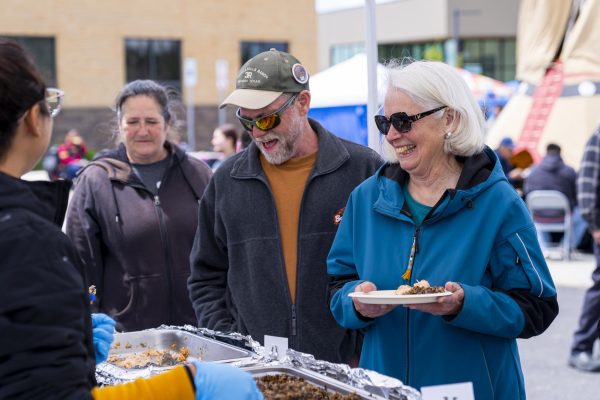
As a tribal member who helped prepare the salmon, Mustalik said the process is an ancient tradition, and that his sisters are who prepared the salmon for the fire. His role was a “bull cook,” having to watch over the fire and salmon to ensure it’s cooked. Each side of the salmon is skewered on a stick of Alder wood, around a yard long, with smaller skewers to keep it in place. Mustalik checked the salmon by feeling the backside to make sure it is cooked through; when it starts dripping it’s almost ready.
Along with the salmon, food and cultural festivities, a number of vendors from the native tribes presented their works of art from native jewelry, to baked goods. to educate the public about indigenous rights. There was also a silent auction table that was overseen by many of the COCC staff. The Salmon Bake ended with a ceremonial round dance.