




















































The Iran War. The debacle in Minnesota. The mounting onslaught of Artificial Intelligence. The new housing crisis. With a constant deluge of bad news accessible at one’s finger tips it’s easy to imagine that life is on a continuous downhill with no stopping point. Which, right now yeah, things are hard. But I’m here to offer some clarity with a cold splash of reality. To contextualize our present with the past and help others understand that this is just a part of a cycle.
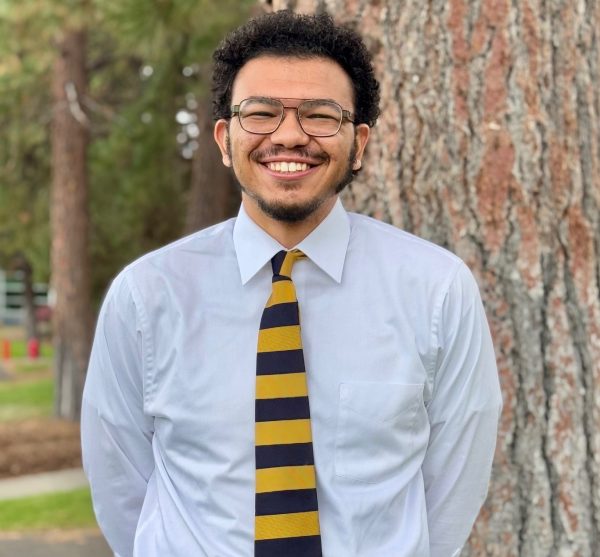
I study history–I have for years. And with a specialty in American history, one thing I’ve noticed it’s that our history works in cycles, shifting like a pendulum from one extreme to another. Sometimes in a gradual way, other times all at once, and I have high confidence that this tumultuous period will end soon. But don’t just take my word for it; I interviewed Murray Godfrey and Tom Barry, professors of U.S. history and sociology respectively to give authoritative context.
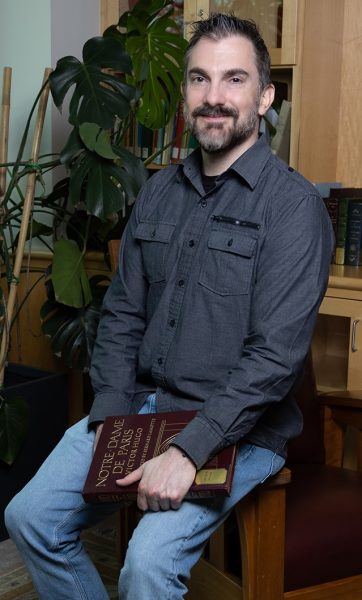
Photography courtesy of Sarah Azad (Ray Randall)
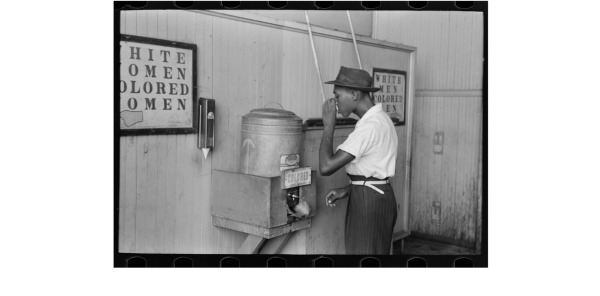
Both professors said we’ve always always trended toward progressivism, whether on a macro or micro level, but it always triggered waves of backlash, be it anti-immigration or conservative political movements. Barry said things were especially tense during the 1950s and 60s. The landmark 1954 case, Brown V. Board of Education, and the passing of the Civil Rights Act in 1964 paved the road for modern-day right wing politics. Because the Democratic party directly addressed systematic racism, it caused Southern Democrats, a longstanding, substantial voter base, to abscond to Republicanism; they were embraced with open arms.
This was part of a larger “Southern Strategy,” of repackaging racist ideas into innocuous ones–states’ rights, law and order, the silent majority. These glorified dog whistles were used most notably by Richard Nixon to secure his victory in the 1968 presidential election. This strategy is still in practice today.
And now for the big, orange elephant in the room. President Trump’s rise, and rise again, are attributed to a few key factors. His first term was won because much of the U.S. was tired of Barack Obama’s progressivism and presence as a Black man in office. The pendulum can only swing so far. Barry, borrowing from an Atlantic article headline, said that Trump was the first white president. As in, the first president to be elected explicitly because he was white.
The precursor to the modern far-right movement we see in office today saw its rise in Obama’s first term during his handling of The Great Recession, in the form of the Tea Party Movement. And as far back as the 2000s Trump had flirted with the idea of running for president, saying it with continuously more conviction leading up to the 2016 election.
Trump’s status as a Washington outsider also made him popular with political groups like the Tea Party Movement. And that outsider popularity’s been seen with several notable former presidents, too. Ronald Reagan, Jimmy Carter, Theodore Roosvelt; the list goes back centuries. This is what prevented Alexander Hamilton from running for president–he was considered too much of a Wall Street insider, “too big city, too New York,” as Godfrey put it.
The second time Trump won, chiefly, was because of the clumsy passing of the torch from Joseph Biden to Kamala Harris. “I was telling people before (the) 2024 (election), ‘Be prepared for Trump to win,’” Godfrey said. And it wasn’t out of support for Trump but because the vice president succeeding the unpopular incumbent president has never proven successful.
That’s also why Nixon won the 1968 election. President Lyndon B. Johnson became wildly unpopular for his escalation of the Vietnam conflict and his V.P., Hubert Humphrey, couldn’t answer how the U.S. was pulling out of Vietnam. Harris was plagued with similar questions about U.S. troops, prices and Biden’s declining health–his increased unpopularity was contagious. As Godfrey said, Trump didn’t win because he was stronger, Harris lost because she was in a weaker position. After all, she lost the popular vote by 1.5%.
Trump has since paralleled one former U.S. president heavily: Republican Grover Cleveland, the only other president to serve non-consecutive terms. And just like him, Trump has made widely unpopular decisions in his second term.
For Cleveland it was union-busting, working with robber baron J.P. Morgan to stabilize the U.S. Treasury, and preventing the federal government from helping Western settlers, veterans or even the economy–the Panic of 1893 was the worst depression of the 19th century. For Trump, well, his failures have made the headlines every day since he took office. He put Elon Musk in a government role and he subsequently fired thousands of workers, exacerbating federal spending. He gave ICE free-reign which overstepped both legal and civil boundaries, and starting a war with Iran.
Cleveland was president during the Gilded Age, one of the most politically corrupt periods in the U.S. And after the assassination of his successor, William McKinley, his vice-president ended the Gilded Age by breaking up monopolies and allowing the federal government to be more effective. That V.P? Theodore Roosevelt–consistently ranked as one of the best U.S. presidents of all time.
Godfrey’s point was that there will always be a Roosevelt that will rise up, just as there will be a John F. Kennedy or Obama. And each time, their rises were complete surprises. In the darkest of times, the seemingly most bleak, the opposition will inevitably shine through. Change is foisted upon the world in the best and worst of times. “Obviously no one would’ve expected Barack Obama in the year 2000. Like, Gore (lost) that election,” he said.
Godfrey added that when Obama won consecutive terms, Republicans voiced the sentiment that they didn’t think they’d ever win again. Democrats voiced the same sentiment when Cleveland was in office, and even more so with Trump, seeming to be traumatized. He added, “(Political) parties adapt. It’s like, life finds a way .… They’ll adapt before they die.”
But returning to the topic of Vietnam, we’re living through yet another costly war. Trump was goaded into war with Iran by Benjamin Netenyahu, who convinced him that victory was all but assured. That the superior technological might of the U.S. would overwhelm. A New York Times article gave intimate details as to how this occurred. But cutting off the head of Iran’s leadership did not weaken the nation, as the two assumed it would, but galvanized Iran to do whatever it took to harm the U.S. And now we’re at a clash of egos, as Godfrey put it.
But unlike war in Vietnam, Iraq or Afghanistan, there was no gradual escalation this time. Presidents Johnson and Bushes Sr. and Jr. spent extensive amounts of time garnering both domestic and international support for their respective wars, making the idea that there was a crisis in those countries believable. But Trump jumped in feet first, backtracking the “no new wars” promise he ran on.
“Generally speaking, a reversal of one of your core campaign promises is not a good idea. I can’t imagine there’s a world in which that turns out well,” Godfrey said.
He continued, saying that similar to past conflicts abroad, all Trump can do is pull out. Because there’s no winning, nor any end to the Iran conflict as things stand. But like me, Godfrey is highly dubious of a third World War breaking out.
He said for one thing, Trump’s bark is always worse than his bite, and when things get “real,” he de-escalates. Destroying their missile silos and their navy, about one-fifth the size of the U.S.’s, was playtime. It gets “real” when civilian infrastructure is targeted. It doesn’t just make the U.S. weak or that we’re losing the war but causes massive outward immigration. Just as Trump de-escalated ICE when things in Minneapolis reached a fever pitch, Godfrey predicts he’ll do the same with Iran; Israel already did, after all.
Other countries, aside from admonishments, also won’t get involved, because the closing of the Strait of Hormuz hurts other countries more than the U.S. China, for instance, gets 20.3% of its crude oil via the Strait. The pressure for a ceasefire is far greater than the push for war, and no president has ever started one and gotten a happy ending; it was Bush’s abysmal performance in Iraq that gave direct rise to Obama.
“There’s reasons for optimism,” Godfrey said simply.
The same can be said for AI. It’s here to stay, he asserted. And it’s going to do both more and less than people think it will, but right now those parameters are still unknown.
It’s important to note that every revolution has drastic cultural and economic effects. The Industrial Revolution put thousands of independent farmers out of work and forced mass migration to urban centers. The disdain for the movement was so strong that an entirely new wave of art emerged: Romanticism, a misplaced nostalgia that glossed over the high poverty levels and lack of affordable goods.
The automotive revolution of the early 20th century caused the implosion of an entire industry: manure cleanup. At one point manure was such an issue that an entire crisis emerged in 1894 on how to take care of all of it. Horse-drawn wagons and carriages were no longer needed, and neither were their caretakers. All of the knowledge and expertise needed for handling both the animal and their waste, useless. But the influence of horse-powered vehicles stuck–modern suspensions are modeled after horse drawn carriages, and even the two words, car and carriage, share the Latin root carrus, meaning two wheeled chariot.
The technological revolution that began in the 1970s gave rise to automated work, significantly diminishing the need for hard labor and thus, labor unions. Godfrey explained it best: per Martin Luther King Jr.’s words, the arc of the moral universe is long but it bends toward justice. “But in the thick of (the arc), it can look bad. In the thick of it, it can look pessimistic.”
Godfrey said that though some aspects of our lives will change for the better–housing prices going back down and younger political representation is on the rise–some things, like the job market, will never be the same. He warned against looking at economically blissful periods like the 1950s with nostalgia, because though houses were much cheaper then, 22% of Americans during that time lived in poverty. The white picket fence ideas that permeate the cultural landscape are no different than the social media influencers that seem to have it all figured out, he said. Barry reminded us that people built bomb shelters in their backyard in this time period–we’ve lived through worse.
But even in comparison to the 2000s, the job landscape was different. Godfrey explained:
“I remember circa 2007… going into rooms where there were these huge group interviews. Where we were all waiting in line to apply for these few jobs …. There (was) like a hundred of us. And I remember a lot of them being older than me, and me thinking, ‘There’s no way, I cannot compete (with) them … I’m screwed’…. It seemed hopeless, but it eventually started to even out.”
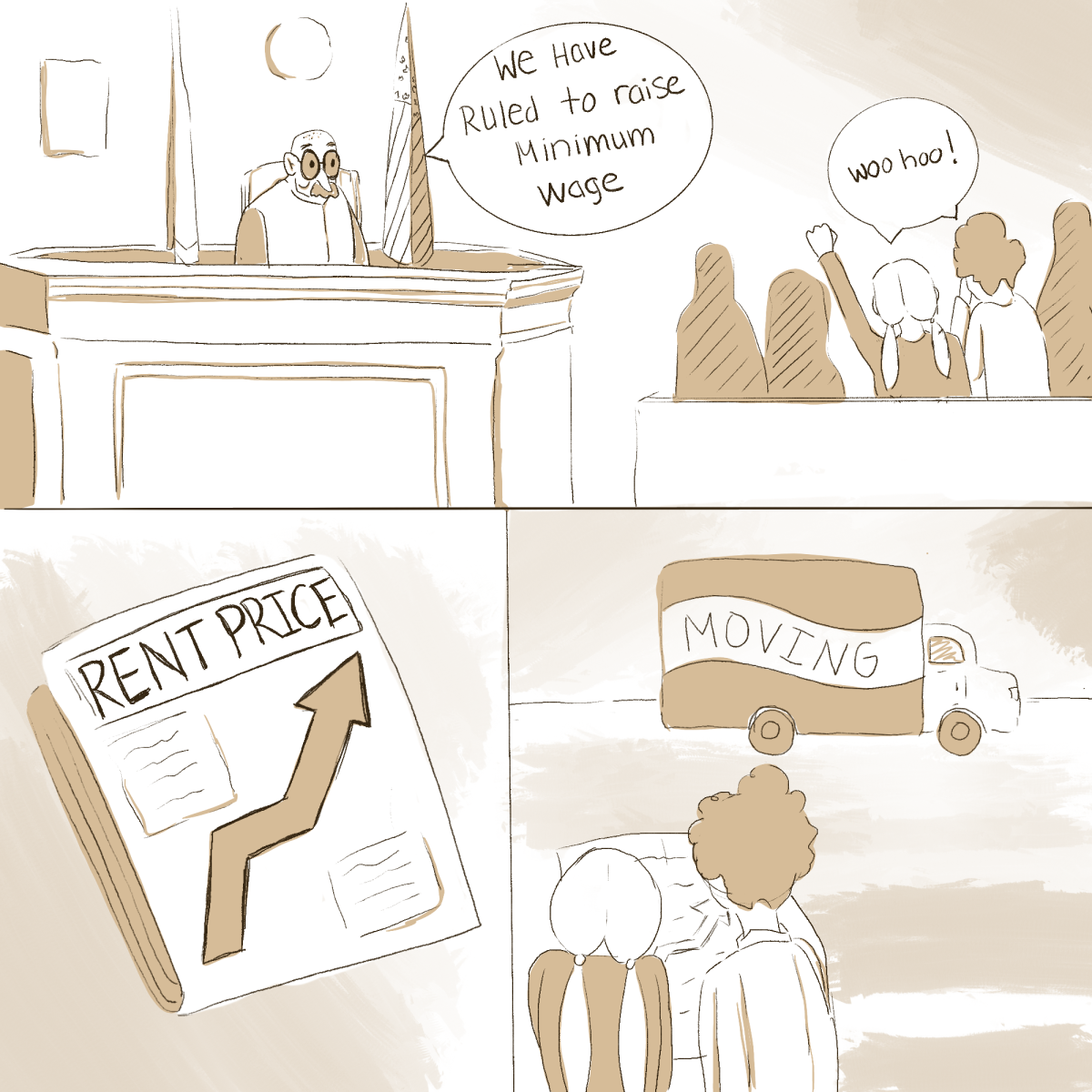
Millennials had a worse job market but things were cheaper. Our generation has the inverse problem: a plethora of jobs but a high cost of living. He’s confident, though, that we’ll learn to adapt. He said we’re more entrepreneurial than his generation and that there’s different kinds of affluence; we just have to harness the one that works best for us.
Barry, meanwhile, advised us not to bury our heads in the sand, but also be mindful of our information intake. Too much of both is detrimental. He encouraged us to get more involved with our local communities–it’s where we spend most of our time after all. “You’re going to have even more of an influence and actually be connected, and have a voice moreso, at the local level,” he said.
I couldn’t agree more. I feel for our generation, I do. But we also need to stop freaking ourselves out and ground ourselves in reality, because that’s ultimately what’s most needed mentally. For as bad as things are right now, we’ve seen worse. For as scary as they are, we’ve also made so much progress across the cultural, gendered and racial lines.
I implore all who read this to take heed in those simple truths. To believe that we will get through this. And if you don’t believe me, or the professors, believe in your elders. Whether they be communal or familial, they’ve faced this and worse. Bottomless wells of knowledge; they must be heard once more. Take stock in their lived experience, please.