




























When talking about words and their origin, nowhere is it more important to look than Black America. Everywhere you look, whether it be music, movies, or even sports, popular culture is deeply rooted in Black culture–has been for generations. The latter is especially true with the way people talk.
I’m incredibly proud of not only my culture but the influence it continues to prove amongst my generation. After all, Black culture wouldn’t have so many culture vultures if it wasn’t rich enough to steal, right? But I take great issue with African American Vernacular English, Black slang, being passed off as just what young people say–it becomes “American slang.” It not only erases each bit of history but wrongfully attributes credit.
Culture is moving faster than ever because of the internet and words and phrases are picked up and discarded like trends. Words like unc, deadass and big back come to mind. These each have a specific story attached to them, they mean something to us and our culture, yet my generation only seems to parrot what they see online without any further regard. My goal is to help others understand the impact of their words. Where it comes from, and how the people behind the culture feel about it.
The sole benefit I see to this rampant exploitation is that I now struggle less to be authentic. In the past, more often than not each time I used AAVE in conversation with the uninitiated I’d be met with politely puzzled looks–I’d have to stop and explain myself. That’s now much less frequent.
In every other capacity I find myself insulted and aggrieved with my generation. Take deadass as an example. It comes from New York City, meaning “for real.” It spread through 1990s hip-hop culture and can be posed as both an affirmation of beliefs or a question. All this to say that I shouldn’t be walking around Central Oregon hearing white people say it.
I’ve never been one to police the culture but this just feels a step too far; it’s so far removed from the organic culture that to hear it is painful. To return to the trends disposal I spoke of earlier, I fear that sometime soon when these words die out amongst the non-Black community we’ll be seen as the weird ones for using supposedly dated slang.
Unc is another example. Short for uncle, it’s generations old and used as a term of endearment for respected elders. What’s key is that unc can also be reciprocated with nephew. There’s a relationship between the two words–something seemingly unknown to much of my generation. It’s more than just a word yet every time I see it used the barrier for entry is lowered; anyone over 21 can be considered unc depending on the social circle.
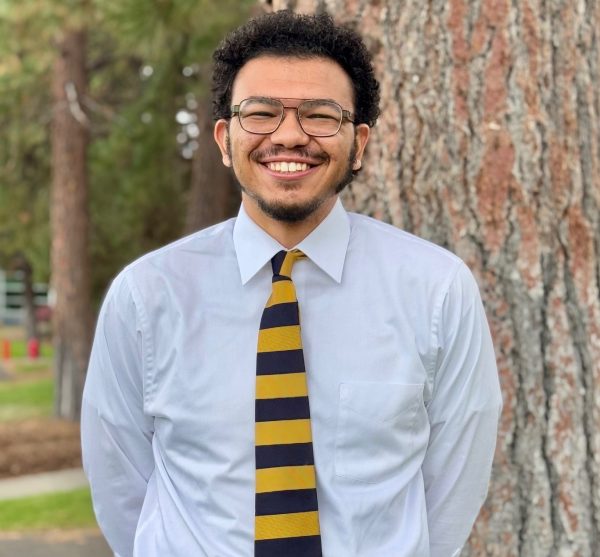
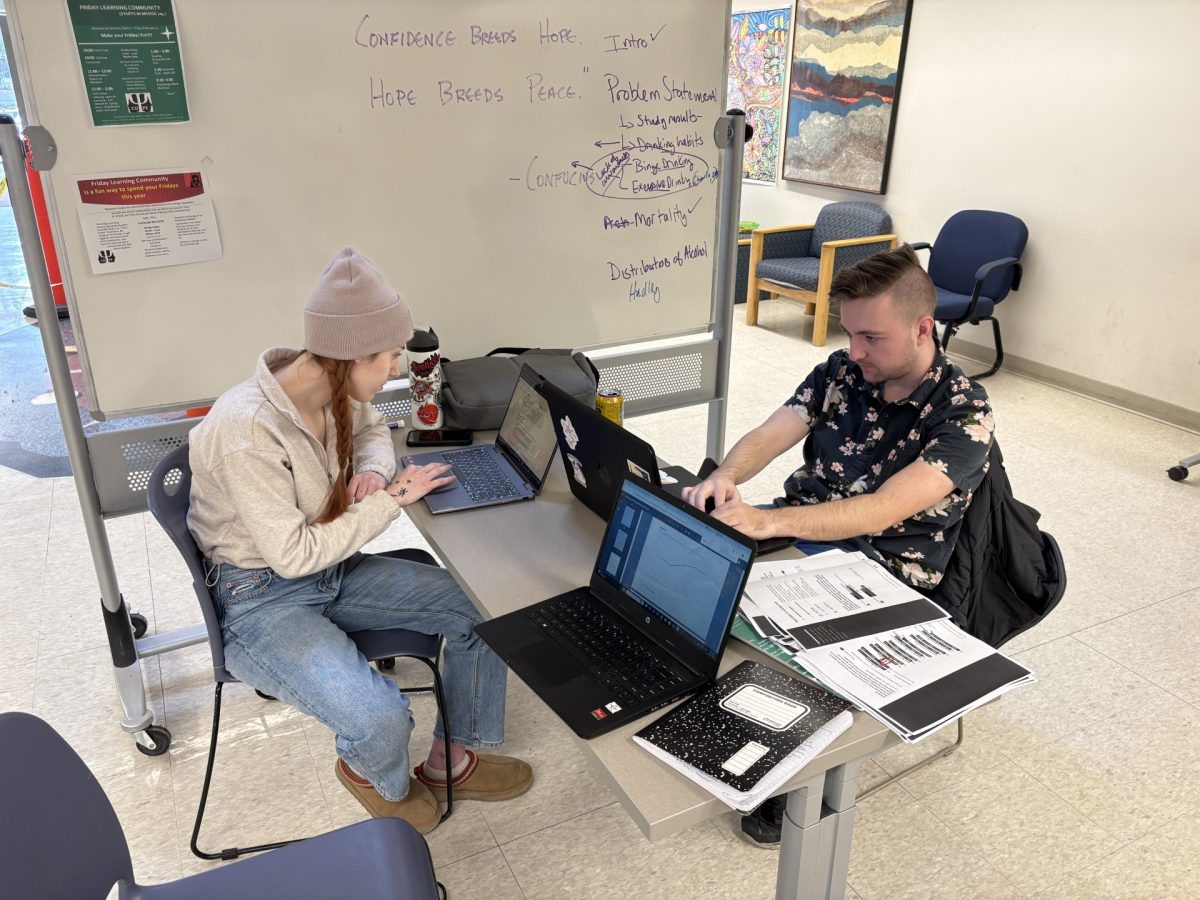
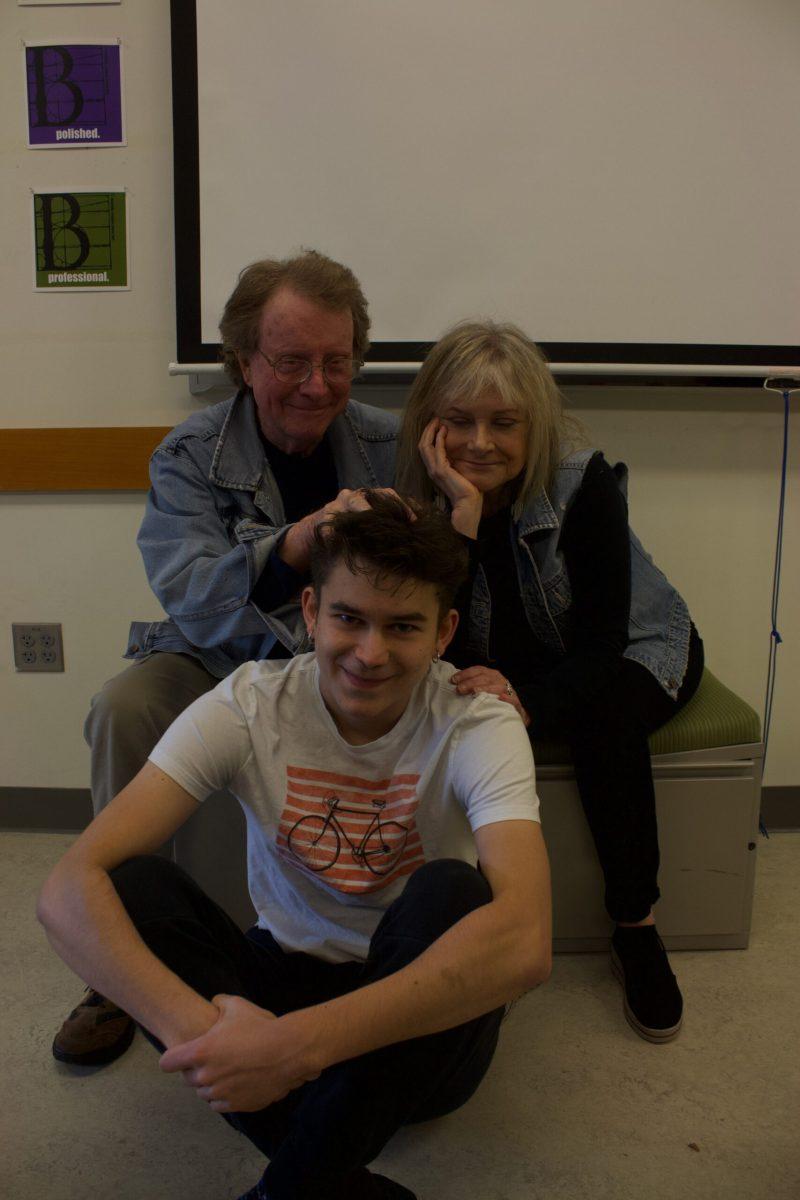
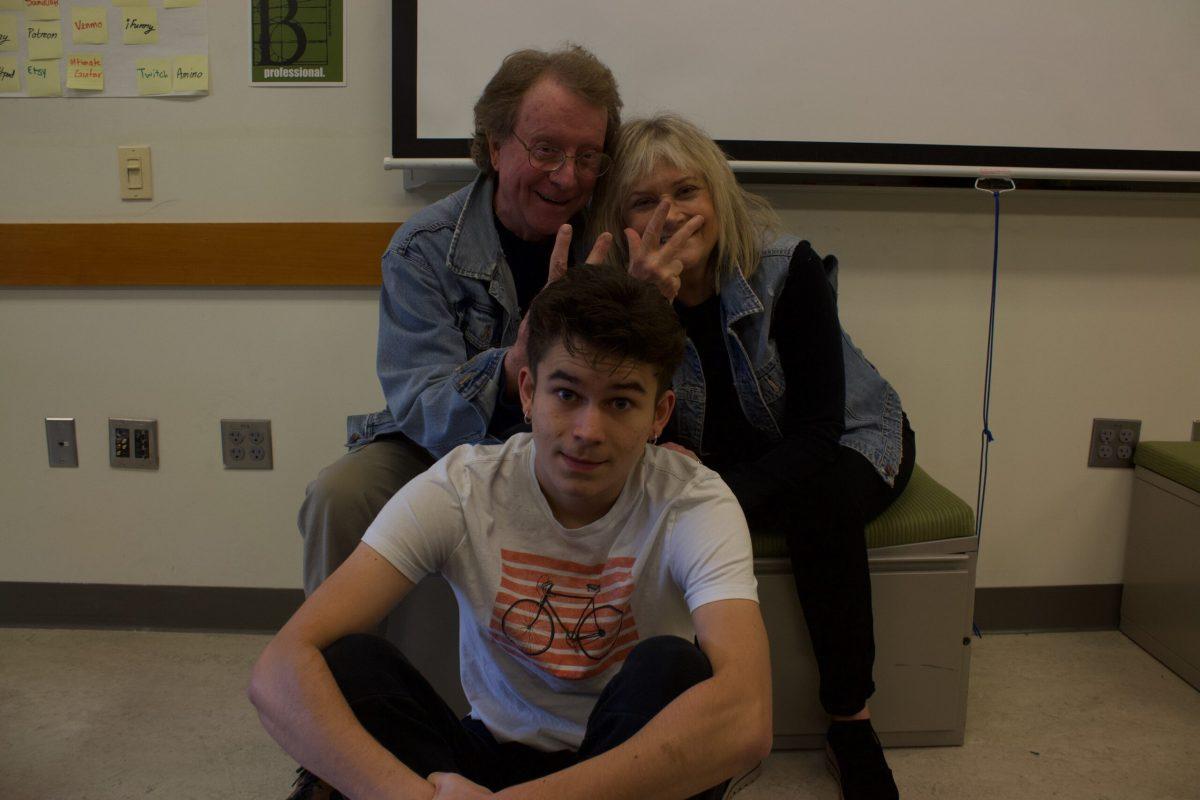
I had much to say on this but didn’t want to go at this alone so I had a conversation with my vice-president of the Afrocentric Student Program here at Central Oregon Community College, Malaya Dolium.

“(AAVE is) a staple for our community. And I feel like it, like, holds everyone together.”
She continued on–the importance of it with her own life and her father’s life. Much of the AAVE in her household are East Coast; it reflects the family’s ties to New York and for her father, NYC specifically.
Deadass, finna, brick, bussin’ and wildin’ were cited as commonly used in the Dolium household. And just to prove a point, those won’t be explained.
She said the beauty of using AAVE with other Black folk is that she doesn’t have to explain what she means. When I said the same thing can be applied with non-Black people, she conceded that it makes sense but still doesn’t agree with the notion.
“Because (it) personally–just to put it nice–like, agitates me…and (the words) become less nuanced,” she said.
Dolium took an issue especially with the term gyatt. Phonetically speaking, gyatt is pronounced the same as “ɡäd’dam” and has a plethora of possible uses.
“It could be if you see someone attractive. Or it could be if something, like, really major just happened or… if you see, like, an accident or like, something happens on a show.”
Since its popularization on social media the word has shifted from a reactionary statement to a noun. A gyatt. Used to refer to someone’s large derriere. And the nuance, the wide range of uses, gone. A small but nevertheless present example of cultural erasure.
The conversation shifted to the uses of boy and girl. Again, seemingly innocuous words, right? I’ve been called boy plenty of times growing up and two things were always present: it was never for good reason and it was always by older family members; uncles, siblings and my mother.
Girl on the other hand, typically used amongst women, could be used to describe almost any situation. Dolium said it’s just one of the things one grows up hearing and saying as a member of the Black community. Gender and femininity are irrelevant.
Interestingly, she said they sound very distinct from one another. “It’s funny because boy to me seems more aggressive than, like, girl… It’s kind of dark, but it almost reminds me more of, like, slavery.” To which, with a laugh, I immediately responded with I knew she was going to say that. Goes to show how the culture is. Dolium said that much of the way we as a community talk and interact with one another comes from generational trauma, and how we have dealt with centuries of suffering.
Which is true. From slavery to the Civil Rights Movement, the way in which we communicate has deep ties to our resilience against injustice. Don’t believe me? How about Oxford Academic?
“The roots of AAVE were established during the first century of the British colonization of America … The socio-historical evidence suggests that conditions in most of the South were favorable for Blacks to acquire relatively close approximations of the dialects spoken by White settlers, particularly indentured servants. Since Blacks were exposed to a variety of British English dialects and shaped by influence from African languages and possibly also from creole varieties introduced by slaves brought from the Caribbean, AAVE evolved against a background of continuing language contact.”
But what Dolium returned to again and again is how unnatural it sounds when non-Black people use AAVE: “It sounds kind of forced. Or like they’re trying to fit in with something. I’m sorry, it just sounds more natural when, like, Black people use it. Because that’s how we talk. That’s how we grew up.”
I remember a couple years ago when I was a lowly, but happy, UPS Store associate helping a customer. His hat was adorned with fierce right-leaning sentiment but the real kicker was when I handed him his receipt and he looked me dead in the eyes and said, “Thanks, brotha,” and walked away. I was stunned, what could I do? I did the only thing I could: laugh. Laugh and help the next customer in line.
I recall this incident like it was yesterday because his boldness is what I remember most. That arrogant assumption that he could call me what I use with love amongst my community. It’s as insulting as it is hilarious because the entitlement is so pervasive.
It’s part of a larger issue where people don’t want to take the time to ingratiate themselves into a community in a thoughtful manner, they instead use our language to make inroads–a verbal shortcut. It adds insult to injury and feigns intimacy in order to seem like we’re tighter than we are.
Dolium touched upon something that’s been said for decades but nevertheless still rings true: when we, the Black community, say, dress, or do something it’s seen as ghetto, but when Non-Black folks do it, it’s a cool trend. It’s not something we can always turn off with ease, or code-switch out of.
“It’s not a new thing of white people taking our culture or taking, literally taking us… it’s all very connected.”
Elvis will forever be known as the “King of Rock ‘n’ Roll” but he borrowed–and I say that very liberally–heavily from Arthur “Big Boy” Crudup and Big Mama Thornton. Chuck Berry and Little Richard left by the wayside.
How many white celebrities have we seen rocking cornrows or some other historically Black hairstyle in the 21st century alone? Brad Pitt, Zac Efron, Gwen Stefani, Justin Timberlake, I could truly go on. These people have also set dangerous precedents of what is and isn’t okay to do–celebreties have so often been trendsetters.
And even if AAVE something we can switch in and out of, it becomes a slippery slope of, as Dolium described it, not wanting to pander to white people by using the language expected of us but not wanting to sound overly formal and sophisticated either.
What resonated with us both is the difficulty of having to explain this exact subject and the futility within. How can we expect other people to understand why saying trivial words used to describe different genders is grating to our ears? Just like me, Dolium said she doesn’t want to police the culture, she just wants others to understand what we’re upset about.
I couldn’t agree more. I don’t believe I–we–of the Black community are asking for too much. A little more consideration for the words one uses after generations of profiting off the literal and proverbial backs of African Americans seems small, all things considered.
Understand what you’re saying and where it comes from. Know that when you use these words you are removing them from their native environment and divorcing them of their original context. Realize that you help perpetuate a cycle of theft that has gone on long before you–and will continue long after you–by doing so.
One last thing: AAVE is a dialect–it’s not simply a series of slang words spoken by the Black community. This tug-of-war of what exactly AAVE is has gone for decades, dating back to the 1970s when it was referred to as ebonics. And while that scrutiny and disdain of how we talk continues, it’s important to make that distinction.
It’s not so different from Pidgin English, which is a grammatically simplified English, and has variations used across the globe–Hawaii, the Caribbean, Papua New Guinea and Africa. AAVE even borrows from Hawaiian Pidgin.