






































Stepping into Willie Hall in the Coats Campus Center on the afternoon of Wednesday, October 29 resembled that of a night out, from good food to the mocktail booth, the party hats to the simulated field sobriety tests.
Central Oregon Community College’s Bend campus partnered with the Deschutes County Sheriff’s Office, COCC’s Criminal Justice department, the Shared Future Coalition, Student Life, and Public Health Practicum students to put on the event.
Lindsay Buccafurni, the assistant director of Student Life and one of the coordinators for COCC’s Oktoberfest said:
“We want to create a space where there’s healthy, real conversation around what safe drinking looks like. If you’re going to engage, how are you going to get home safely? How are you going to keep your friends safe? All of those things I think are all really important dialogues to have for any age, but especially here in Bend and especially for college students.”
The event consisted of booths from the community offering resources, information, and food if students visited at least three of them.
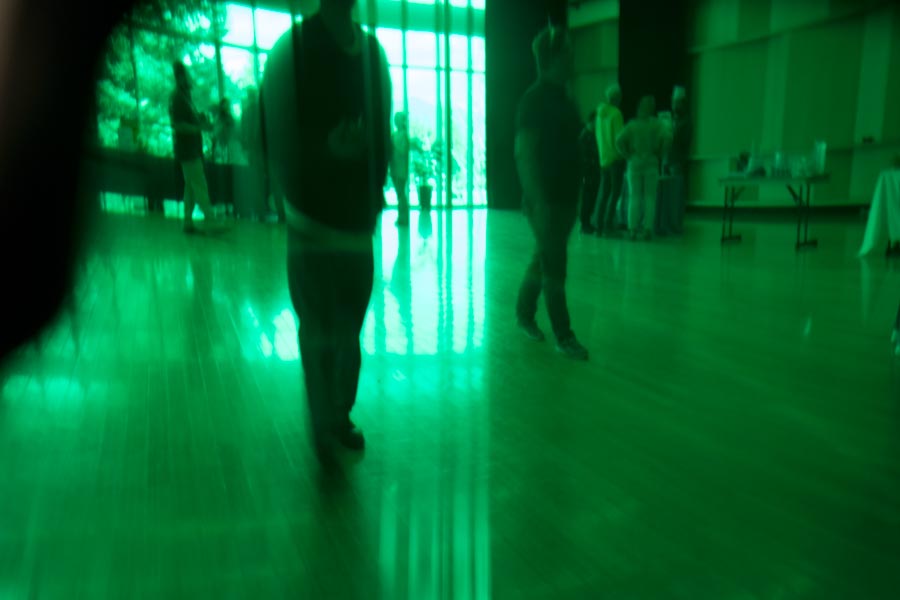
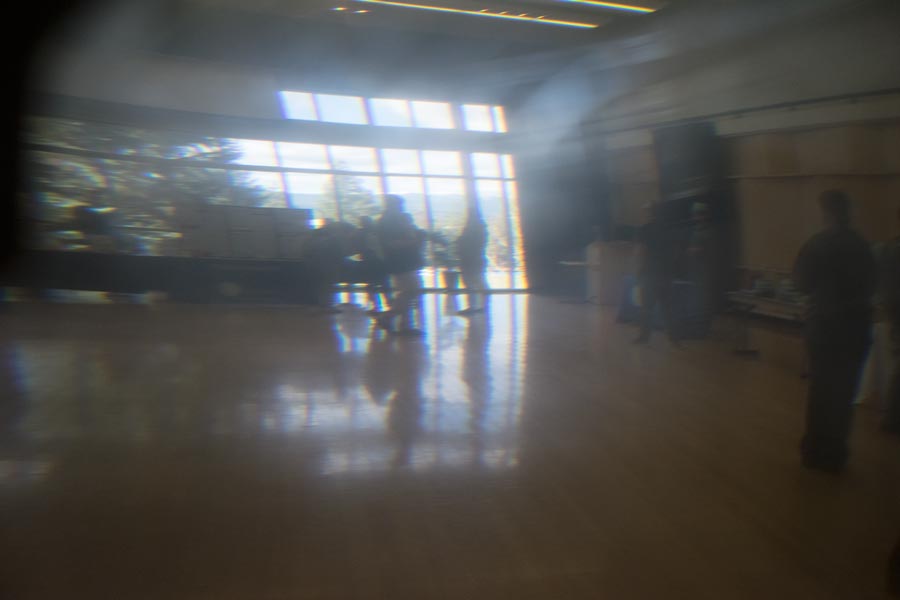
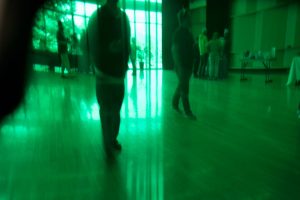
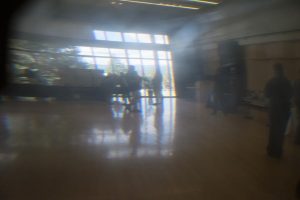
On one of the tables sat a row of large, dark, goggles that caused disorientation. Referred to as “drunk goggles,” they simulated being inebriated visually with blood alcohol level ranging from .07 to .10, well over the statewide .08 legal driving limit. The range also extended to simulated drunkenness in the daytime and nighttime, with a pair for each scenario.
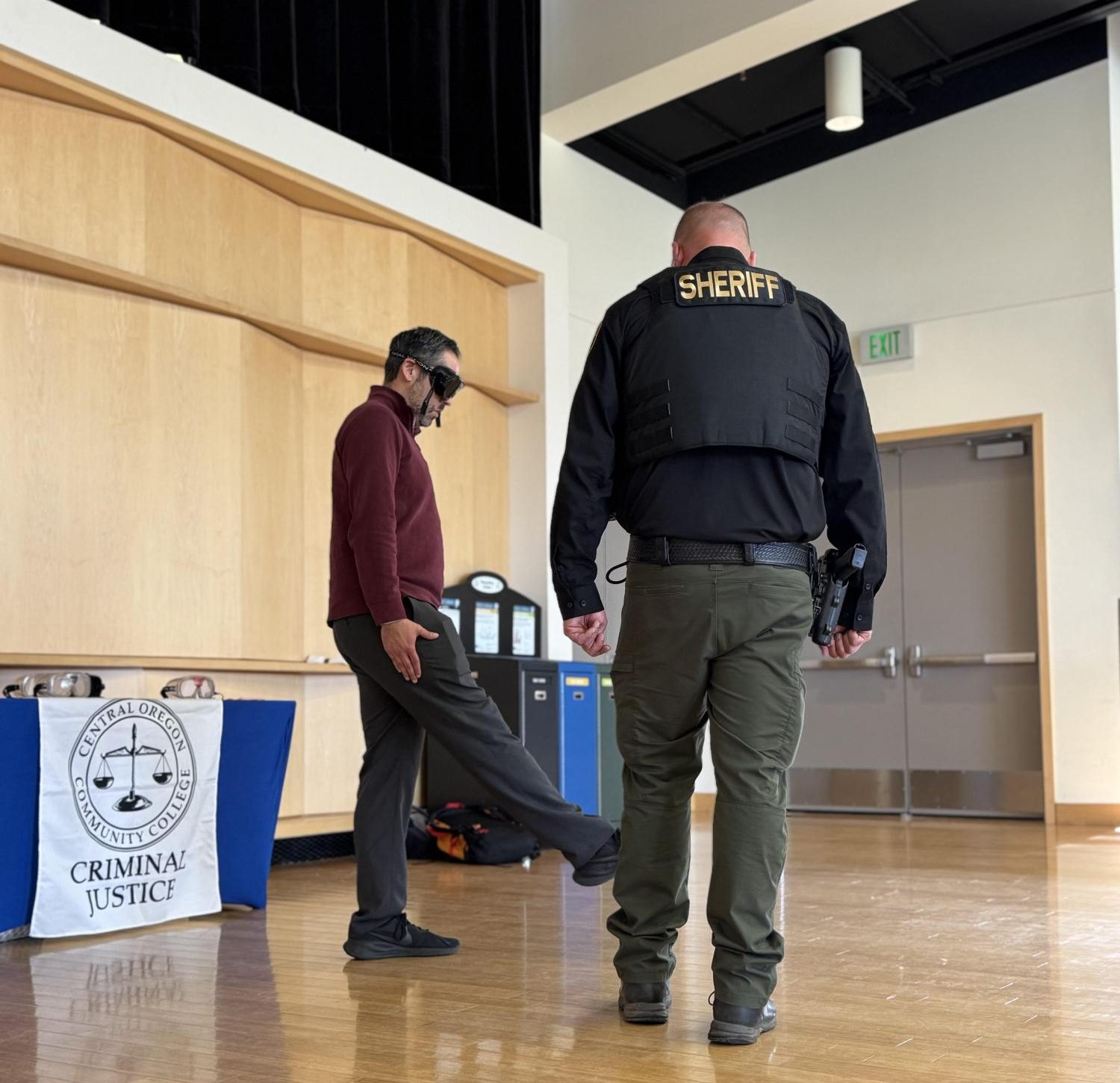
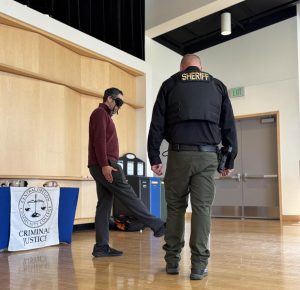
The mock-field sobriety tests, proctored by the Deschutes County Sheriff’s Office, featured a collection of classic prompts such as having to walk five steps in a row while both keeping one’s hands at one’s sides and one’s eyes down, balancing on one foot, or simply walking in a straight line. Folks could be seen wobbling and struggling to follow the prompts of the test. One particular attendee said he was proud that he didn’t pass it.
“The drunk goggles were an experience like I have never had before.” Said Dr. Greg Pereira, COCC’s president, “I felt completely vulnerable and like I was going to get very hurt. I have never experienced anything like that in my life, which also makes me feel good about the choices I’ve made.”
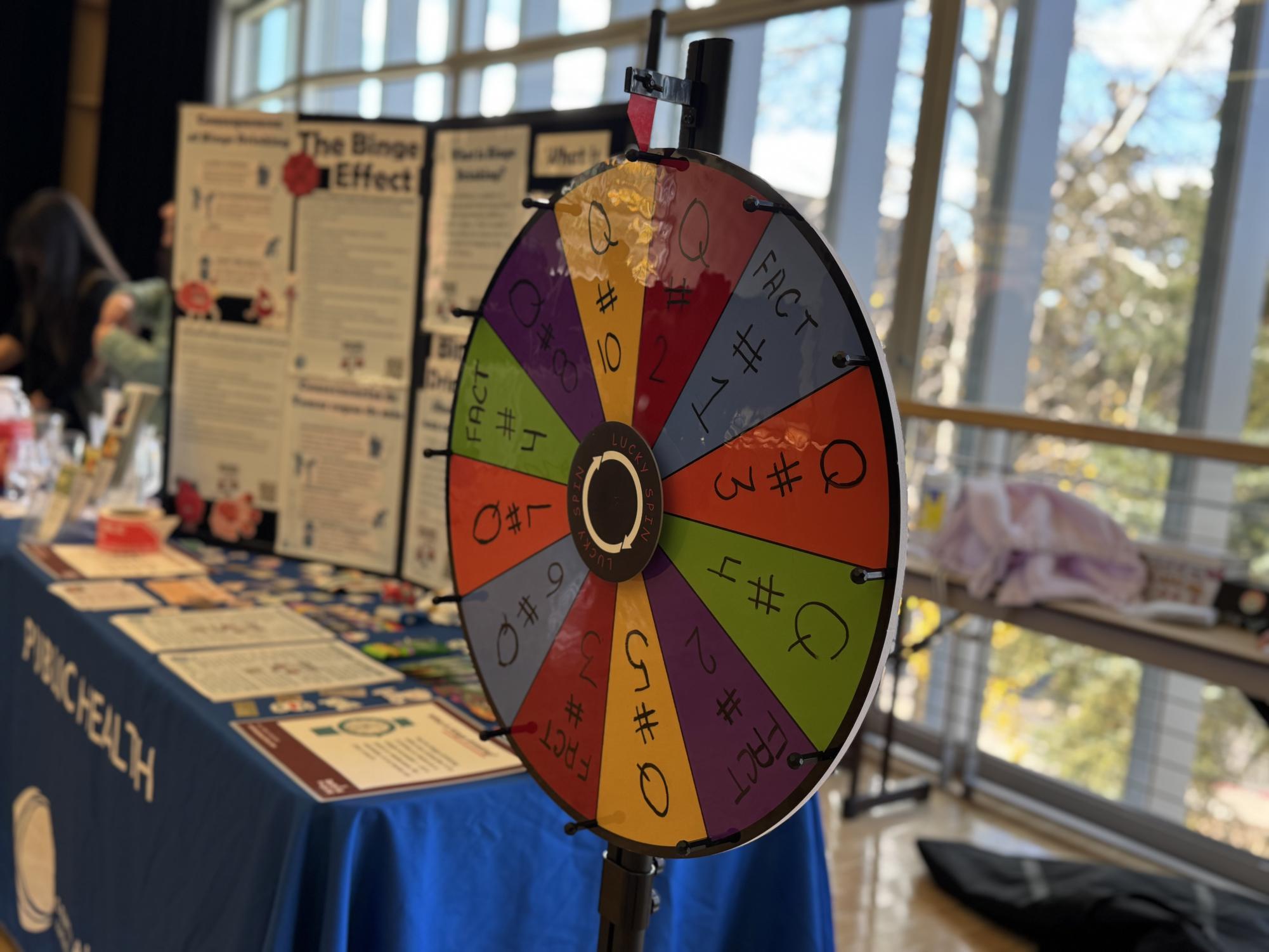
Students and faculty alike made their way around, spinning the trivia wheel, collecting tickets from each table, enjoying mocktails, and trying to pass the mock-field sobriety test.
-
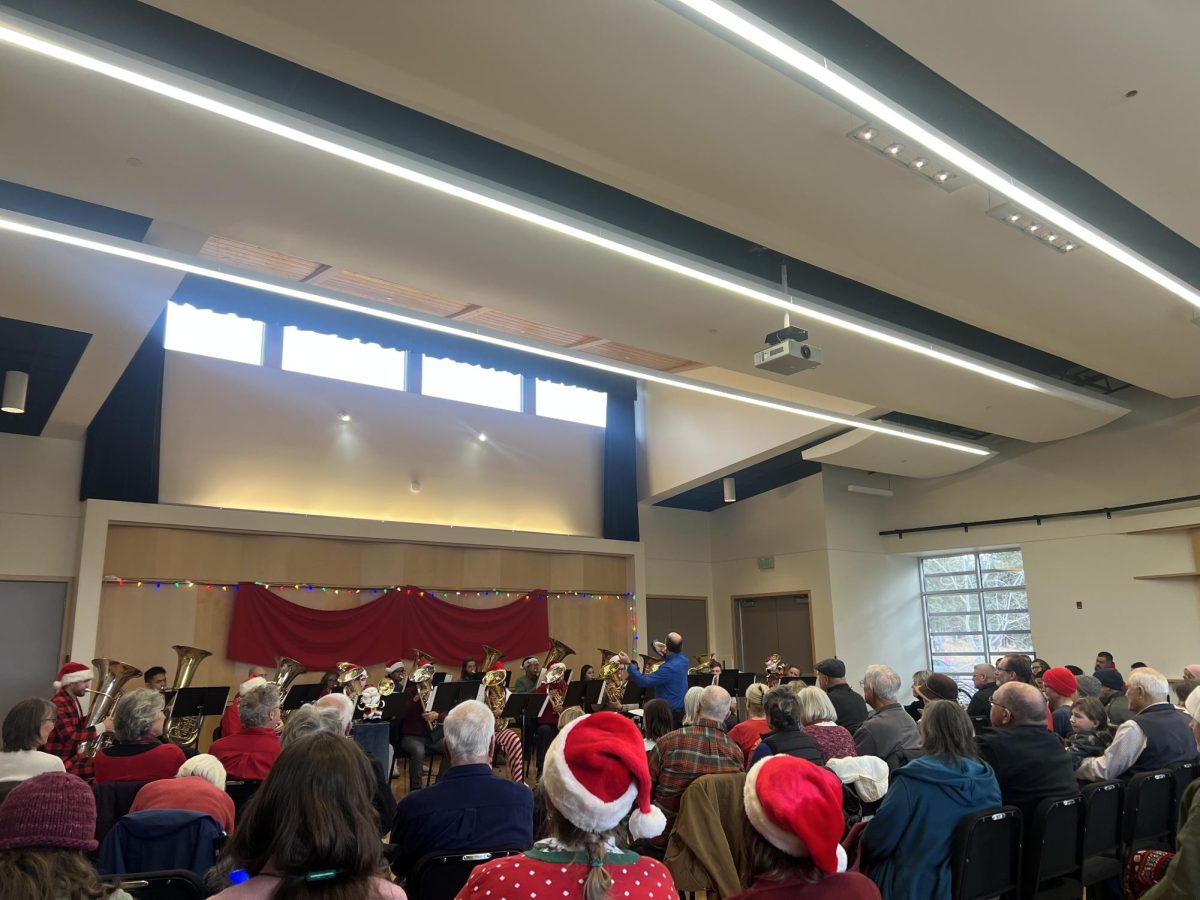
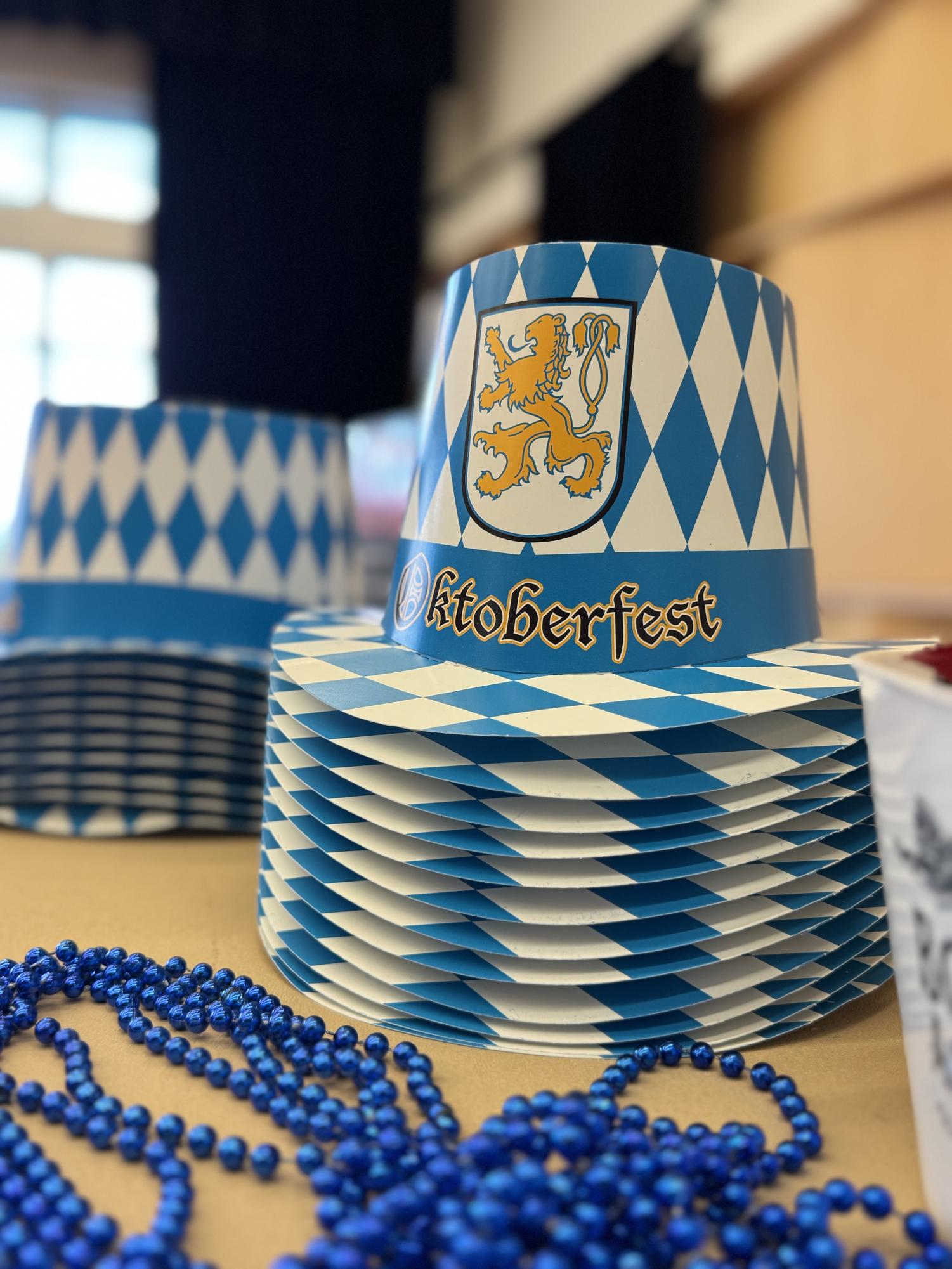
Festive event hats at COCC’s October fest, OCT 29th, 2025.
-
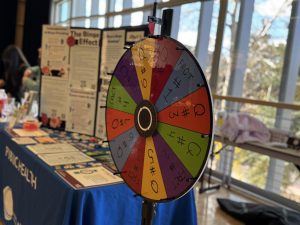
A prize wheel at the Public Health Practicum booth at COCC’s Octoberfest, OCT 29th, 2025.
-
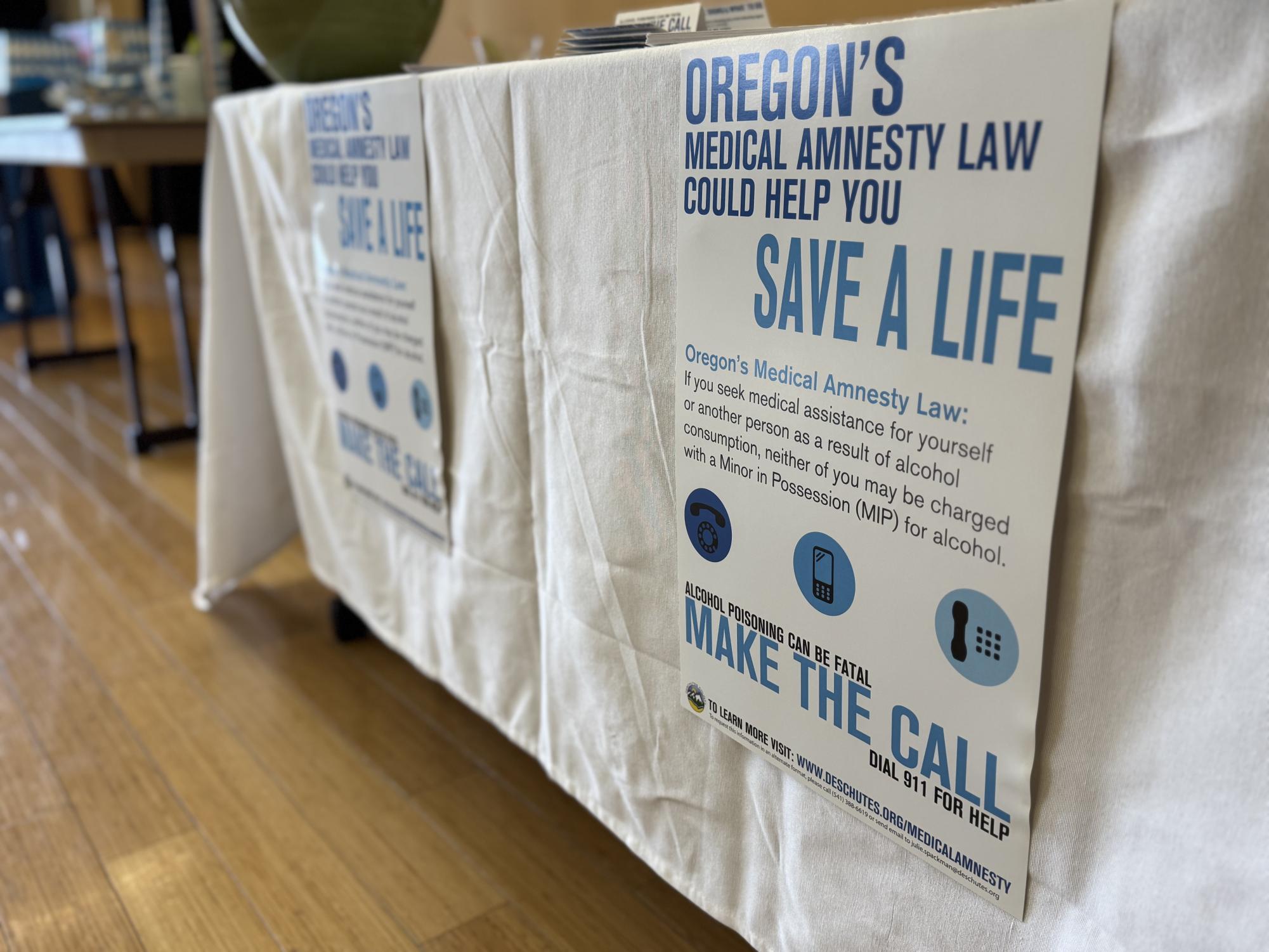
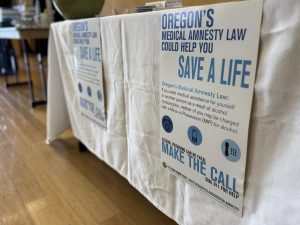
Deschutes County Health Services’ booth on the Oregon Medical Amnesty Law at COCC’s Octoberfest event, OCT 29th, 2025.
-
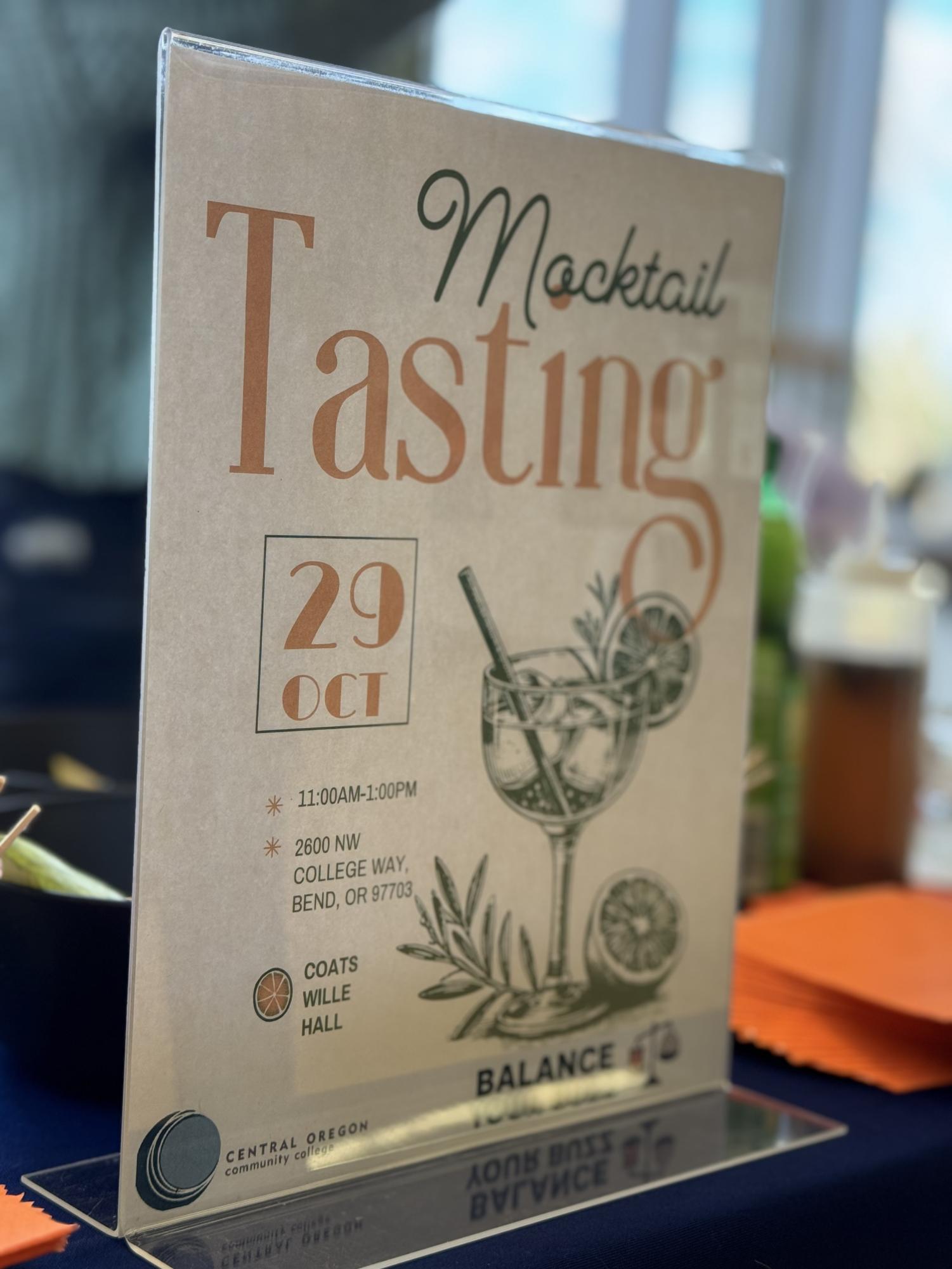
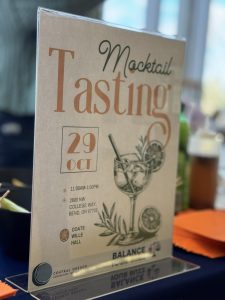
The mocktail station sign at the Public Health Practicum booth at COCC’s October fest, OCT 29th, 2025.
-
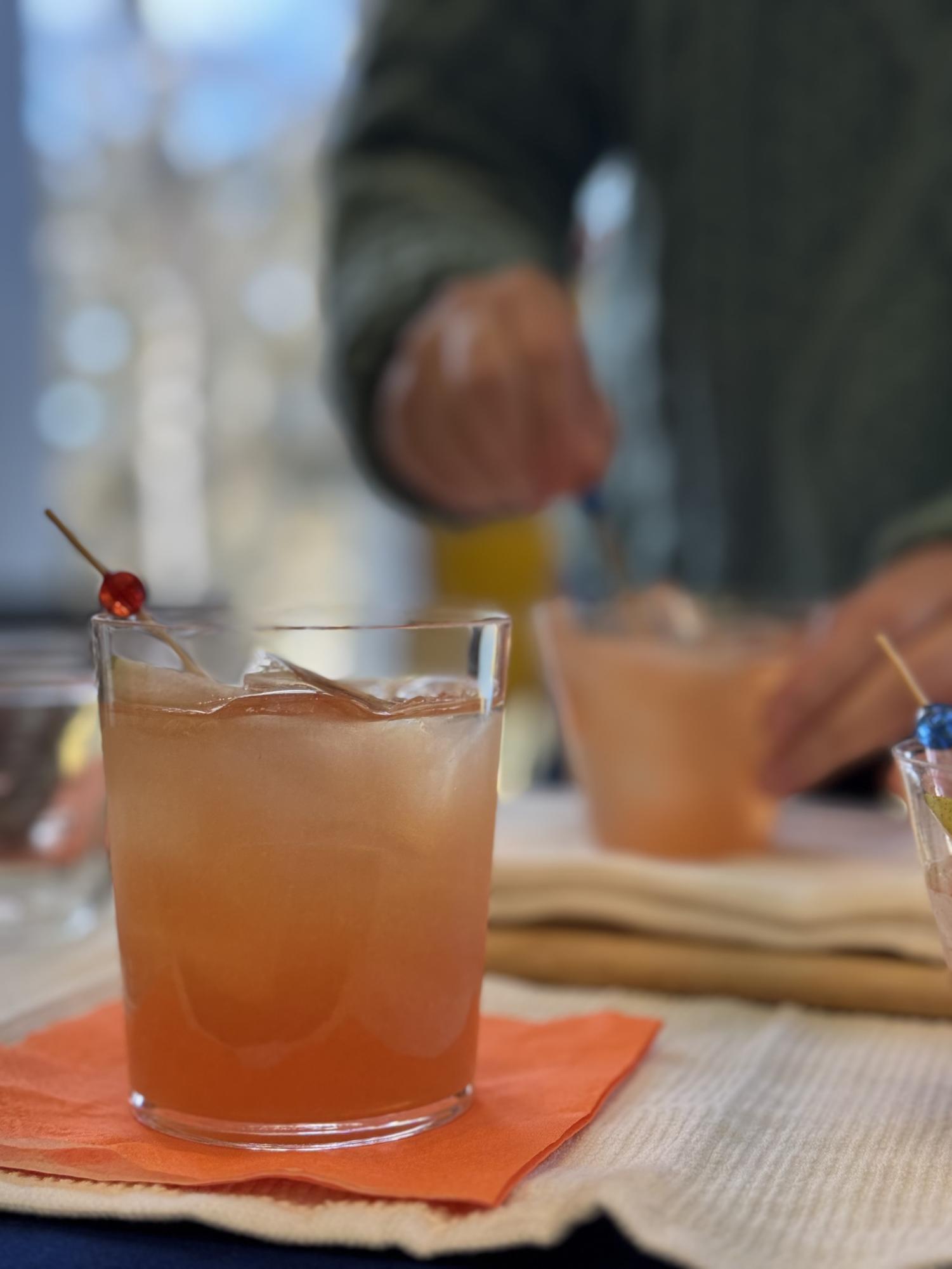
The mocktail tasting station at the Public Health Practicum booth at COCC’s October fest, OCT 29th, 2025.
-
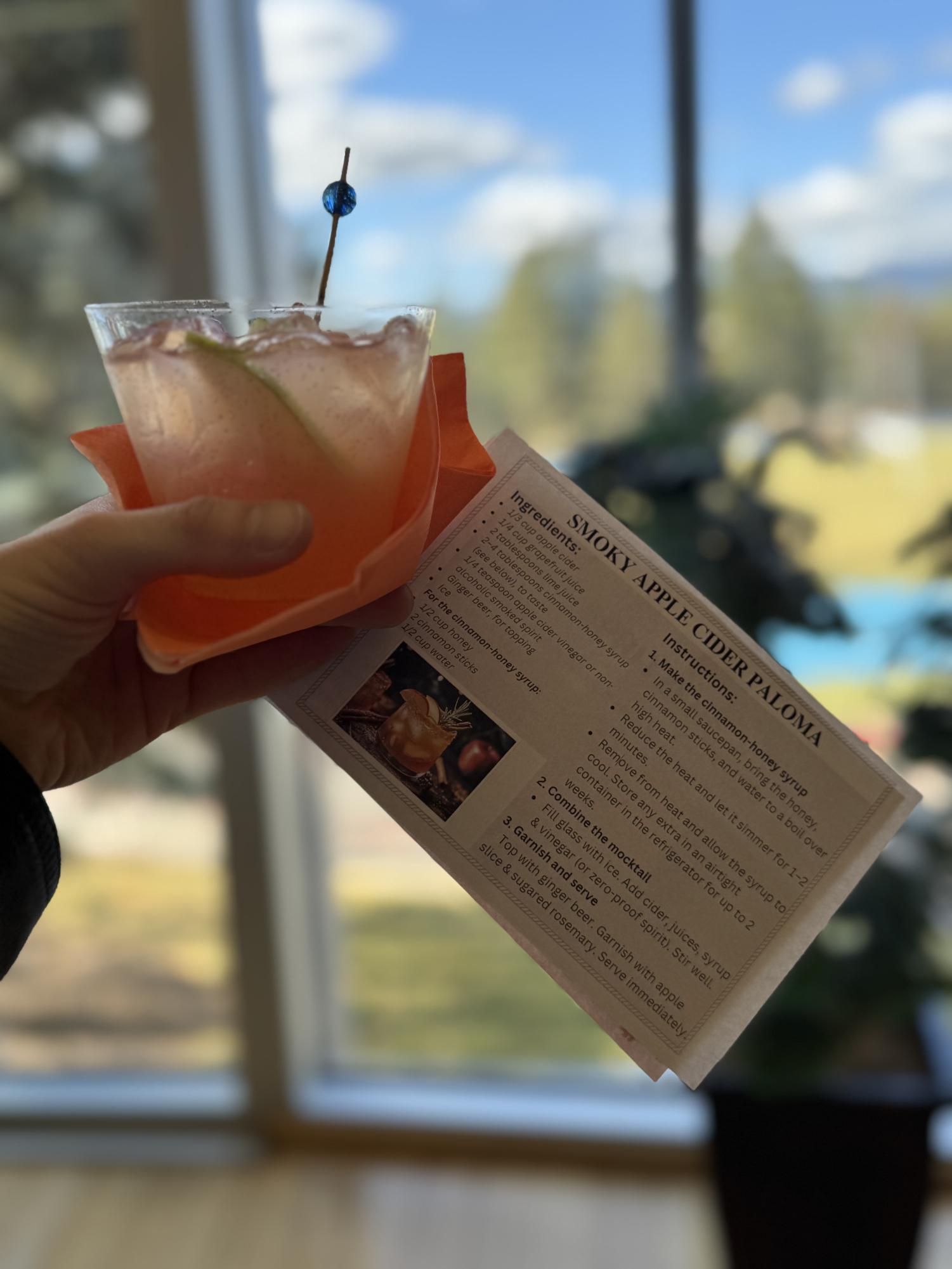
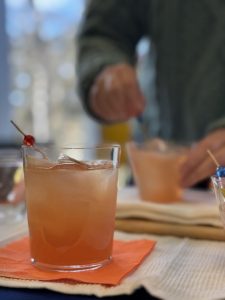
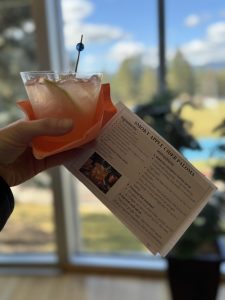
A mocktail and recipe from COCC’s October fest, OCT 29th, 2025.
-
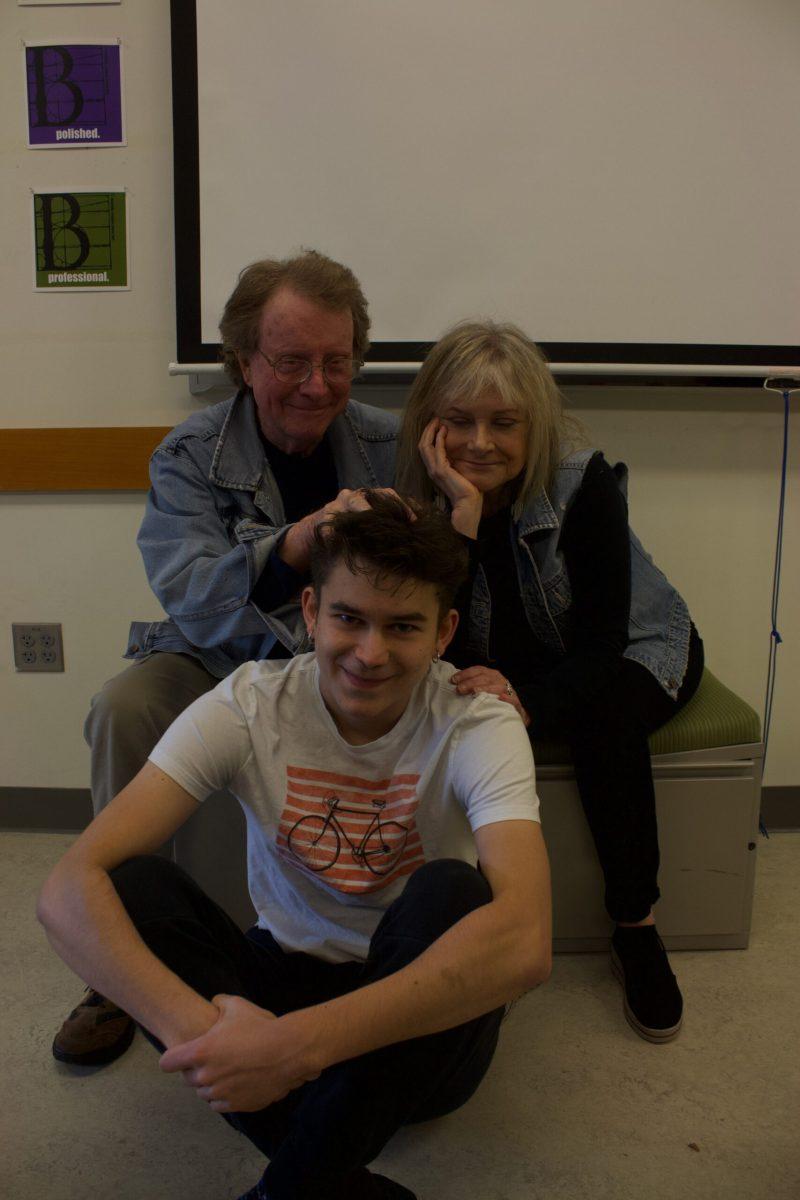
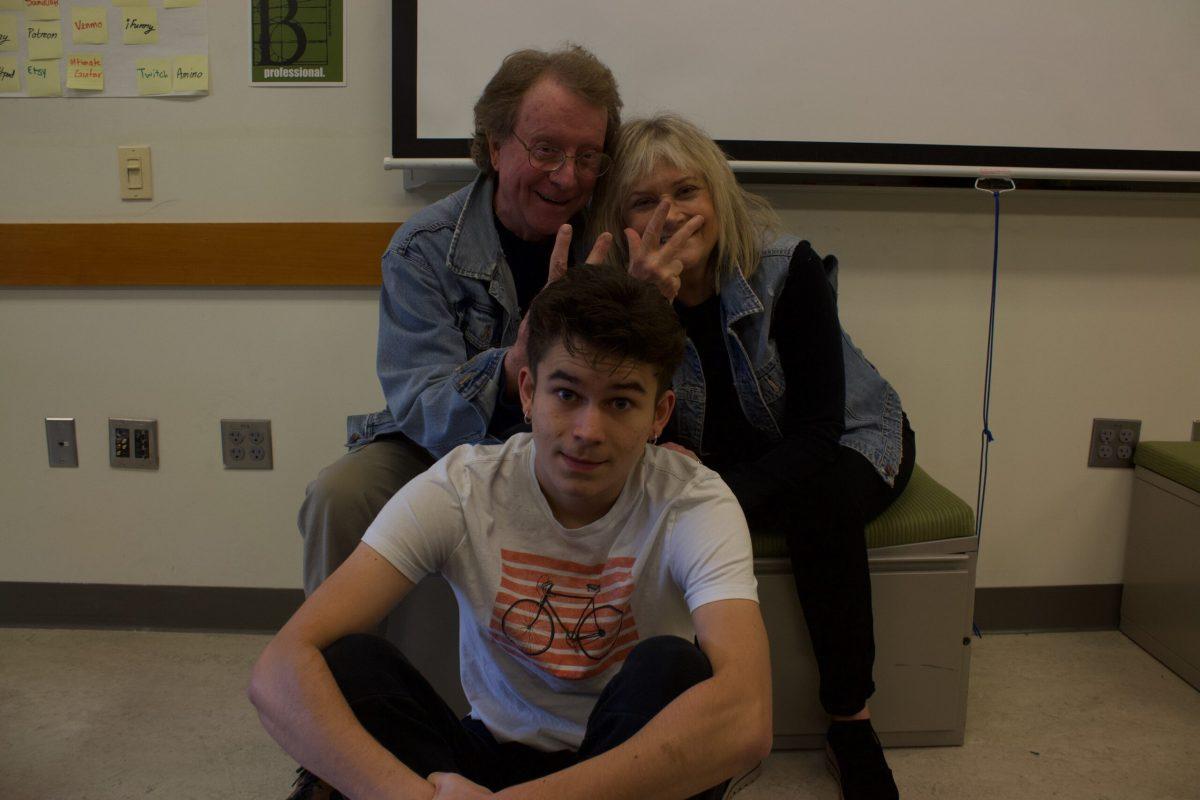
COCC’s President, Dr. Greg Pereira, participating in a mock felid sobriety test proctored by Sargent Danny Graham of the Deschutes County Sheriff’s Office during COCC’s Octoberfest event on October 29th, 2025
-
Photosensitive epilepsy (PSE) Warning: Photo may cause, dizziness. vertigo or seizures. COCC’s Justice Department’s intoxication simulation, through specially googles at this year’s Oktoberfest.
-
Photosensitive epilepsy (PSE) Warning: Photo may cause, dizziness. vertigo or seizures. A goggle simulated view, provided by Central Oregon Community College’s Justice Department, on how your vision would be if intoxicated.

“Trying to walk was kind of a mess for me,” Phia Pool, a student in attendance, said after their failed mock-field sobriety test. “I felt like I was on a tightrope that was just kind of wobbling the whole time.”
Several participants expressed that after wearing the goggles, they couldn’t imagine going to class like that, much less operate a vehicle.
“Don’t drive impaired,” said Danny Graham, a Sargent with the Deschutes County Sheriff’s Office who was conducting mock-field sobriety tests with the goggles. Graham urged students to instead utilize friends, family, and taxi services to get home; therefore keeping everyone else safe.
While good planning and awareness help prevent alcohol related harm, it is important to also know what to do should something go wrong.
Crystal Sully from Deschutes County Health Services explained that there’s no legal consequence to call for help if one suspects someone they know is experiencing alcohol poisoning. She was in attendance to explain the Oregon Medical Amnesty Law. “We always want to call 911 when we can’t rouse a friend,” she added.
According to a 2023 National Survey Results on Drug Use by Monitoring the Future project by Institute for Social Research, though alcohol consumption in young adults has been in an overall steady decline since 2002, with a brief surge in the peak of the COVID-19 pandemic, the prevalence of binge drinking in young adults who do consume alcohol is still high.
“I think events like this are very important for staff, for students, and the community as a whole. To know what dangers can come with celebrations, especially around holidays that people typically associate drinking with,” said Pereira who is excited about the pivot toward harm-reduction.“Realistic discussions about these things are really important for everyone.”
If you or anyone who know is struggling with substance abuse disorder, help is available: