



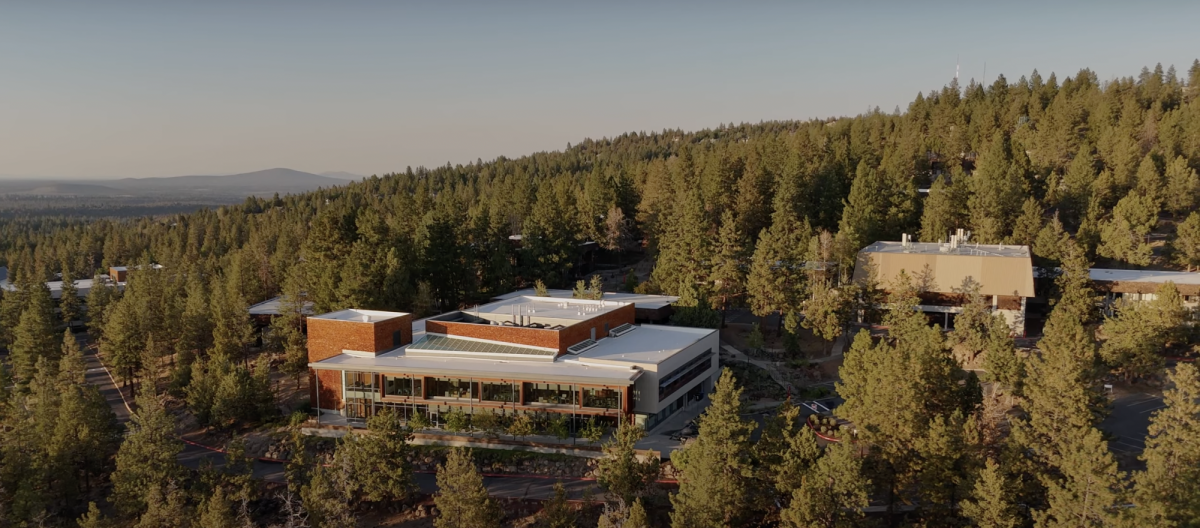













































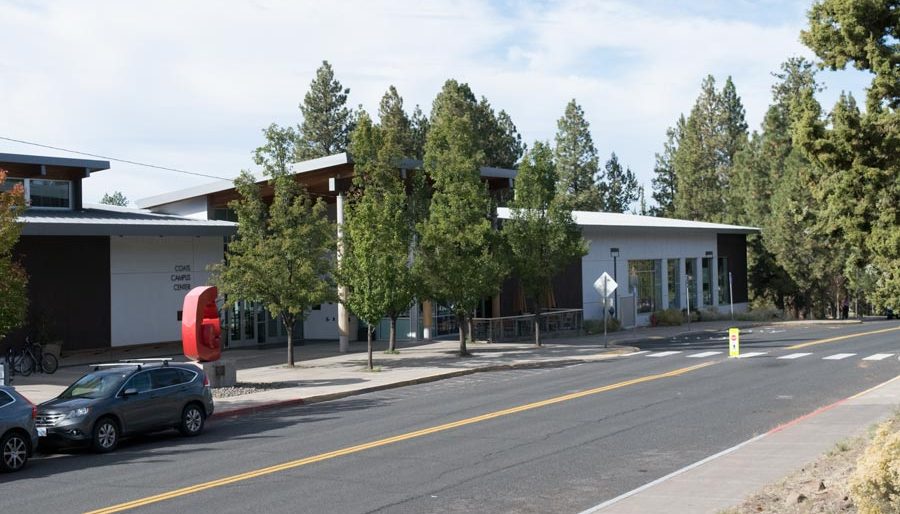
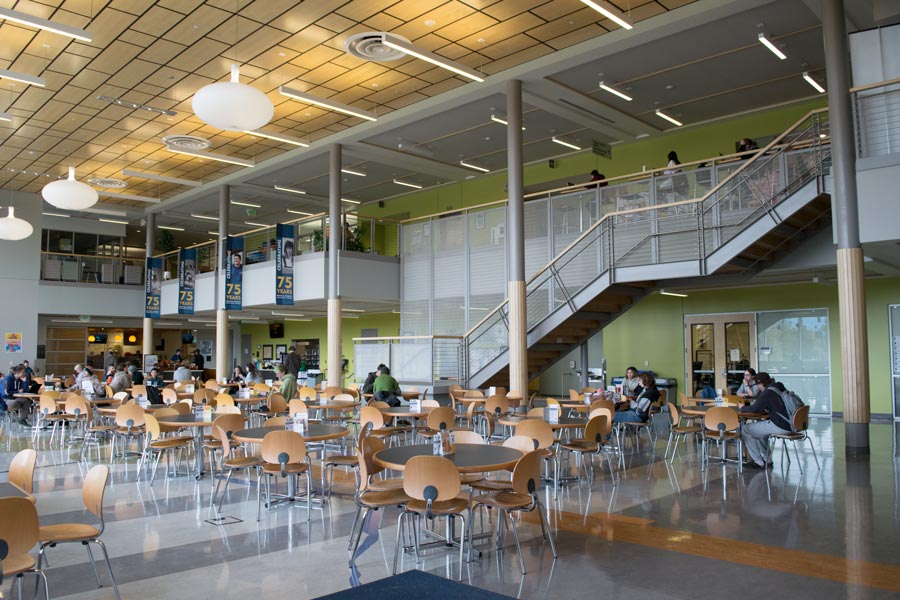
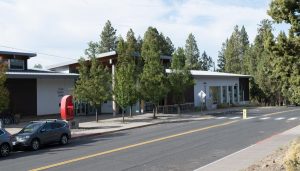
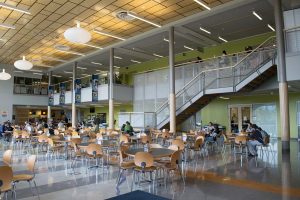
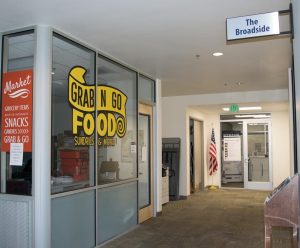
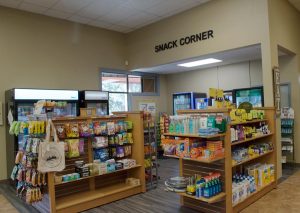
At Central Oregon Community College two buildings are set to undergo extensive changes at a to be determined date. This includes relocating and centralizing both student support services and staff within the department of Equity and Well-Being. The Coats Campus Center will house the multicultural programs and the Ochoco building will house the majority of student services.
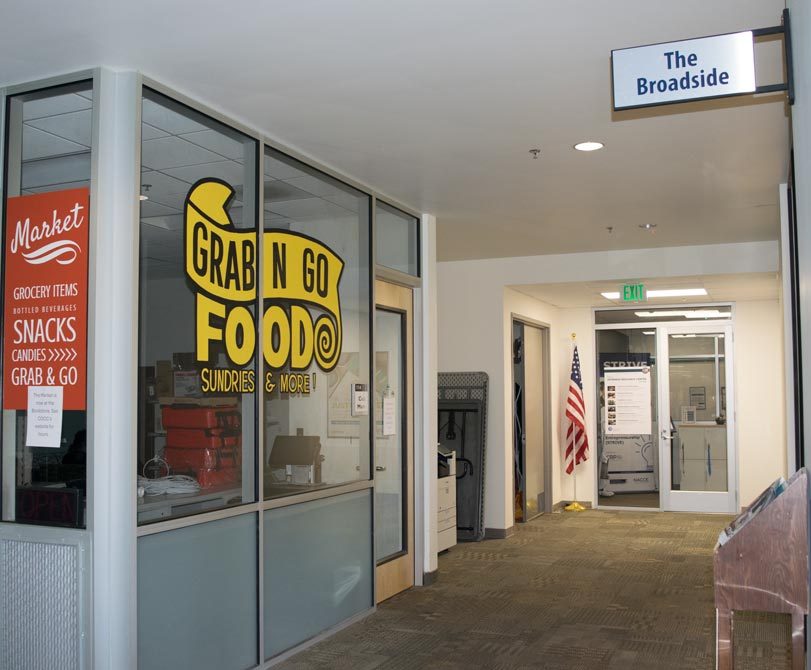
Services to be moved include the food bank, personal counseling, Thrive, The Broadside newsroom, personal counseling services, and the SNAP Training and Education Program.
In part of a long-term COCC plan called Student Support Services: New Directions, it was part of “a reorganization we (COCC) did about a year and a couple months ago,” said Alicia Moore, vice president of student affairs.
Christy Walker, dean of Equity and Well-Being said that transition has been at least five years in the making and has involved various departments, including student affairs, campus services, and vice president of Finance and Operations Micheal LaLonde.
This has been delayed due to a revoking of a 5 year Title III Part A Programs – Strengthening Institutions grant, by the current presidential administration, which affected colleges nationwide.
The renovation project was planned with both the Title III Part A grant for student basic services and the Center for Excellence in Veterans Student Support grant–the latter of which enabled construction of the Veteran’s Resource Center in Coats.
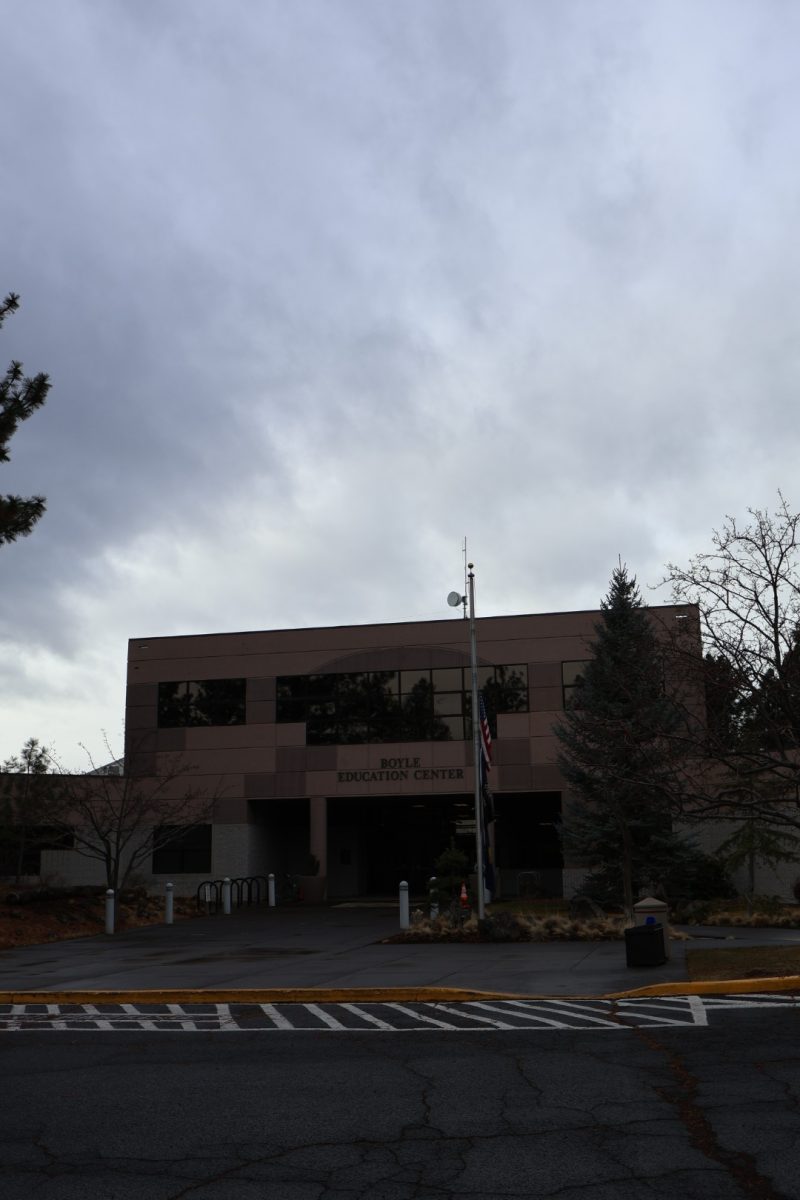
Walker said this project was motivated by a variety of factors. She explained that staff are often unsure of where to direct students in search of resources; they are dispersed throughout the campus. Coats hosts Thrive, student government, the food bank, and the SNAP Training and Education Program. The Boyle Education Center contains the financial aid department while Cascades Hall has CAP Services and personal counseling. And Ochoco Hall holds the Clothing Connection.
The aim is one central and comfortable space for students to address many of their needs. Walker added her hope that this welcoming environment would reduce the stigma of asking for help.
Emma Porter, while she was still in attendance at COCC, said: “I find (the food bank) pretty convenient, but I feel bad for students that don’t use it because … walking to the food bank … can kind of like feel like shameful … being poor isn’t really, really talked about and it’s kind of looked down upon, to be honest, at least in my experience.”
Porter added that moving the food bank to an educational building would be disruptive to students and felt it was not in the students’ best interest.
Bella R., a second year student at COCC, had similar feelings:
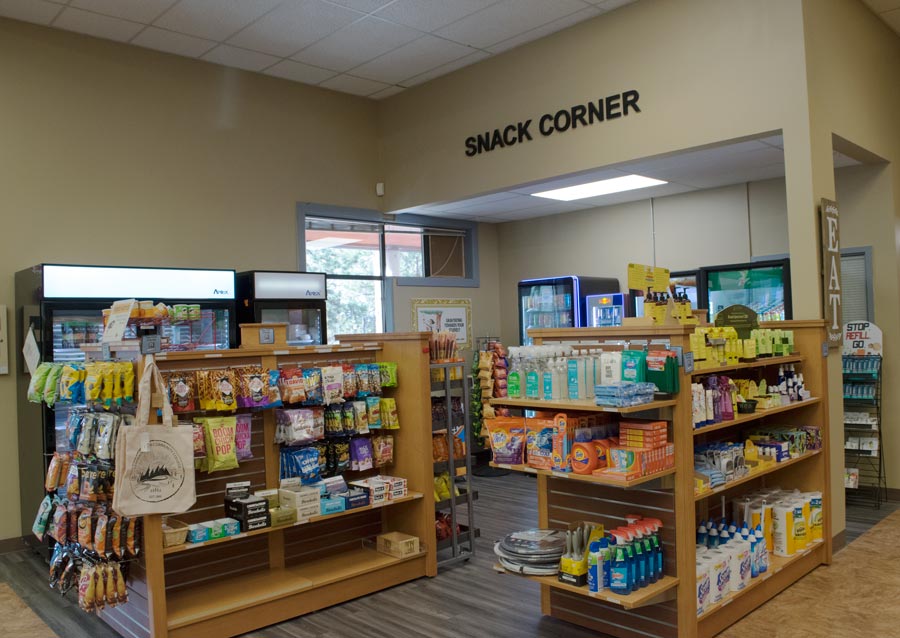
“It’d be more of an inconvenience. Same with moving the (Coats) market because the Coats (Campus) Center is so easy access to people who live at the residence hall. But then again COCC is not just for people who live at the residence hall.”
Talia Stockwell was elected president of Associated Students of Central Oregon Community College last spring and gave insight to the student government’s relationship to the food bank and how the relocation of it would affect students.
Since its inception the student government completely oversaw the food bank but when it became too expansive for them to manage it was turned over to Kari Hays, assistant director of basic needs. Stockwell said this was one of ASCOCC’s forms of connecting with students.
They explained the convenience of the food bank’s current placement; located next to the main bus stop and a relatively short walk from Wickiup Hall. Stockwell added that students staying at the dorm in particular are “a lot of” their served population.
Another student, Colton Robinson said, “The food bank is pretty convenient. It’s right above the cafeteria. Clothing connection is a little out of the way at Ochoco, but it’s still pretty close, close enough to the dorms, stuff like that. I mean, I live in the dorms, so I think it’s all pretty convenient.”
Stockwell explained accessibility concerns they’ve heard from students about the food bank moving to Ochoco. The building is situated near the top of the hill, they said, and the parking lot situation is often frustrating.
Stockwell said there’s been a mixed reception amongst students when conveying the news, ranging from excited to apprehensive. “If they’re depending on it, which a lot of our students who regularly use the food bank are …. It’s really unnerving …. when you’re … one trip to the food bank away from going to bed hungry,” they said.
ASCOCC’s food bank has been a lifeline for Cybersecurity student Raymond Salinas since he relies on Supplemental Nutrition Assistance Program and has a disability. “When I run out of food stamps, I kind of get stressed and it makes it hard to keep coming to class,” said Salinas.
The food bank’s current location also provides easy access from NW College Way, in contrast to the proposed Ochoco Hall’s location. “Going uphill is not an option for me. (It) is very hard for me, especially on my back,” said Salinas.
Salinas also explained that he does not have a vehicle and relies on transportation assistance, but also understands why the college is trying to place related services together.
Stockwell said ASCOCC has already been discussing possible initiatives to mitigate the aforementioned issues, including an online order and pick up system or prefilled bags of food organized where the current food bank is. For the winter months, Moore described a short-term, 15-minute parking strategy, similar to what’s done at a major retail store or outlet.
Even though the relocation of some student services and resources comes with inconveniences, it also will provide current and future students with benefits to help alleviate the stress of traversing the campus to locate particular services or related needs.
Walker explained how centralizing the Equity and Well-Being branch would allow for heightened efficiency and coordination when planning and for events, clubs and other such programs, subsequently enabling further growth and expansion.
Stockwell posited that the food bank moving to a larger room in specific would likely enable more foot traffic. A more dedicated and welcoming space would help remove the feeling of intruding upon ASCOCC matters; it currently operates out of their storage room.
They added that increased management of the food bank would potentially benefit the food banks located on other campuses as more manpower would be able to support them; in the month of October alone 270 individuals had used the ASCOCC food bank.
The aforementioned construction of the new Veteran’s Center last May, the first step in the undertaking, has resulted in a palpable change for veterans attending COCC.
Jake Sonnier, a psychology major, veteran, and peer advisor within the Veteran’s Resource Center, said the former Veteran’s space, also in Coats, was too small to be particularly useful. “If there’s more than two people in there, it got really crowded really quick,” Sonnier said.
Sonnier said the new space is “massive” by comparison. “I walk in and Bonnie’s in here laying out snacks and stuff. I was like, oh my God, Bonnie, this is the coolest spot. Yeah, it was night and day. I couldn’t believe it. It was awesome. I still can’t believe it.”