


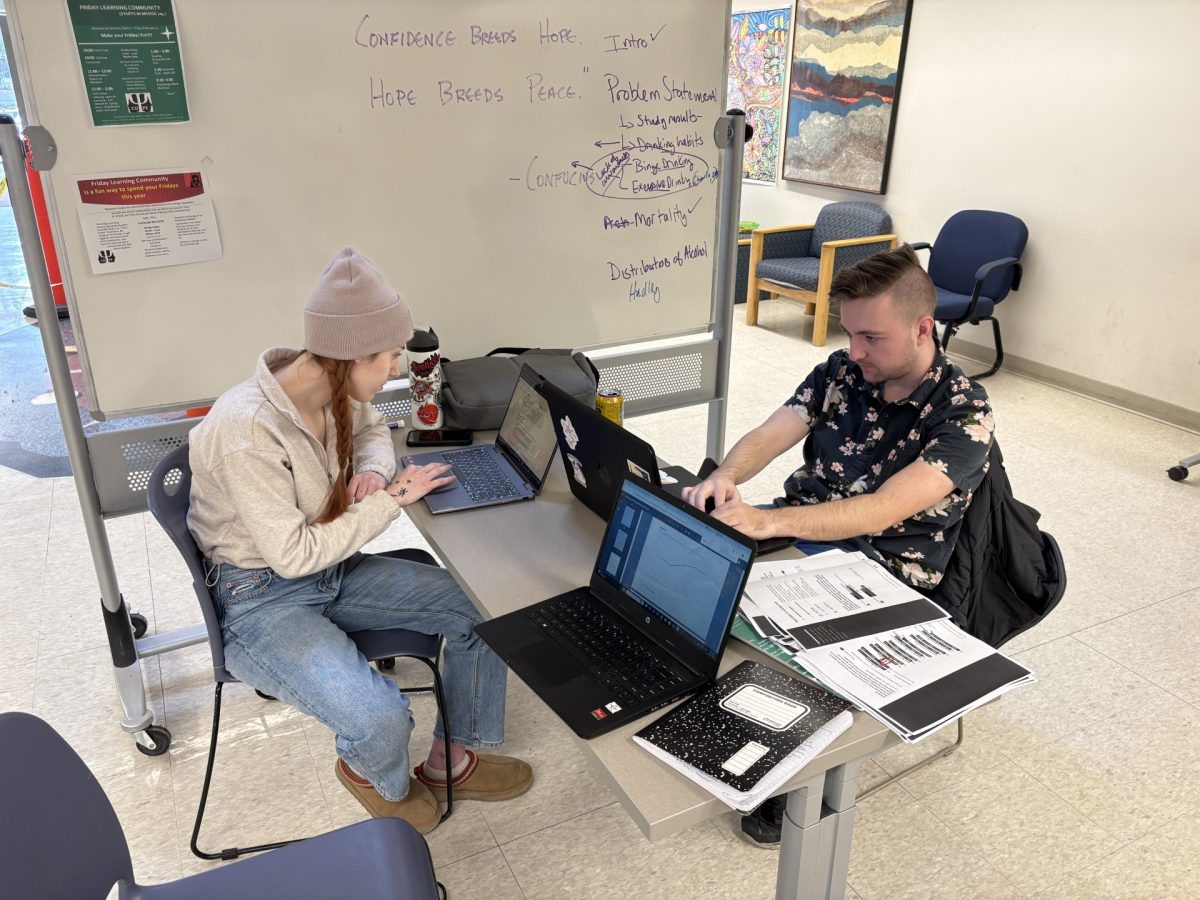



































Online classes are a large part of Central Oregon Community College’s learning platform. Students have shown a clear interest in online options. The college is focusing on building their online programs, and 60-70% of students at Central Oregon Community College have taken an online class in the past year. However, not everyone works best with online classes. Students need to decide whether online or traditional in-person classes are best for them based on their motivation, degree, and location.
While many degrees are being pushed to offer online options, there’s still a gap among degrees on what modalities are offered. Hands-on programs such as aviation, culinary, and nursing, struggle to find ways to offer online classes. These degrees require students to get hands-on learning that cannot be taught through online forums.
However, other degrees can be taken entirely online, including business, computer science, and health information management. These options are ideal for students who are busy working during the day and aren’t sure how to fit a class into their daily schedule. These classes are also accessible to students outside of Bend, where class options may be limited on their local campus. With online classes being entirely digital it allows the college to teach students who reside out of state. Online degrees are often pursued by rural students where their only worry is having consistent internet access.
Many people fear that online classes are not of the same quality of in person classes. However, instructional outreach dean Cindy Lenhart states that technology has advanced enough that she does not worry that the quality differs. Bad teachers can be found in person as well as online, and the format doesn’t change the quality of the class.
Student Alex Foose states that the quality of the class depends on the teachers, but is worried that the college doesn’t have enough professors who successfully teach online classes. “I think a lot of it depends on the teacher and the way the class is generally set up, like I’m taking photography online right now with COCC, the teacher is engaged and the whole class is harmonized.” In the past Foose has taken online classes where all he does is log into an online workbook and complete problems no one taught him to do. “I think for an online class that’s almost to be expected unless the professor goes above and beyond and has all the lectures pre-recorded and everything set up in a specific way.”
Both Lenhart and Foose think that online classes pose their own challenges, even when the teacher is the deciding factor in the quality of an online class. Foose says online classes have a gap between students and the teacher, making it hard to understand what’s going on.
Lenhart states that students who take online classes need to be driven. “There are some students where online is not a good idea because you need discipline…. If you have a class and you need to be there at 9 o’clock, you get your butt down there at 9 o’clock. But online, they say, ‘Oh, I’ll do it later.’”
Some students are better at online classes while others are better with face to face classes. According to Lenhart the students best equipped for online classes are those who are self motivated and understand the bigger picture of why they’re at college.
Online classes lower the success rate of students. The demand for students to learn by themselves and push themselves to be successful makes it easier for students to struggle and fail in online classes. These classes demand the student to figure things out on their own. While teachers are there to help, they aren’t there in person for guidance.
No matter what format students are taking, they need to understand that college is hard work. It’s different from high school, which offers support from teachers and family. College is a choice, and those who want to pursue secondary education must be willing to put in the effort to learn.
