





































Developmental psychologists Erik Erikson and Jeffrey Arnett say that adolescence is commonly viewed as a stage of identity confusion, college-aged years as a time of exploration and clarification, and adulthood as the moment when direction and certainty are expected to fall into place. Yet conversations across Central Oregon Community College reveal a different reality that challenges these assumptions and exposes uncertainty not as a failure, but as a persistent human condition shaped by social structures and historical moments.
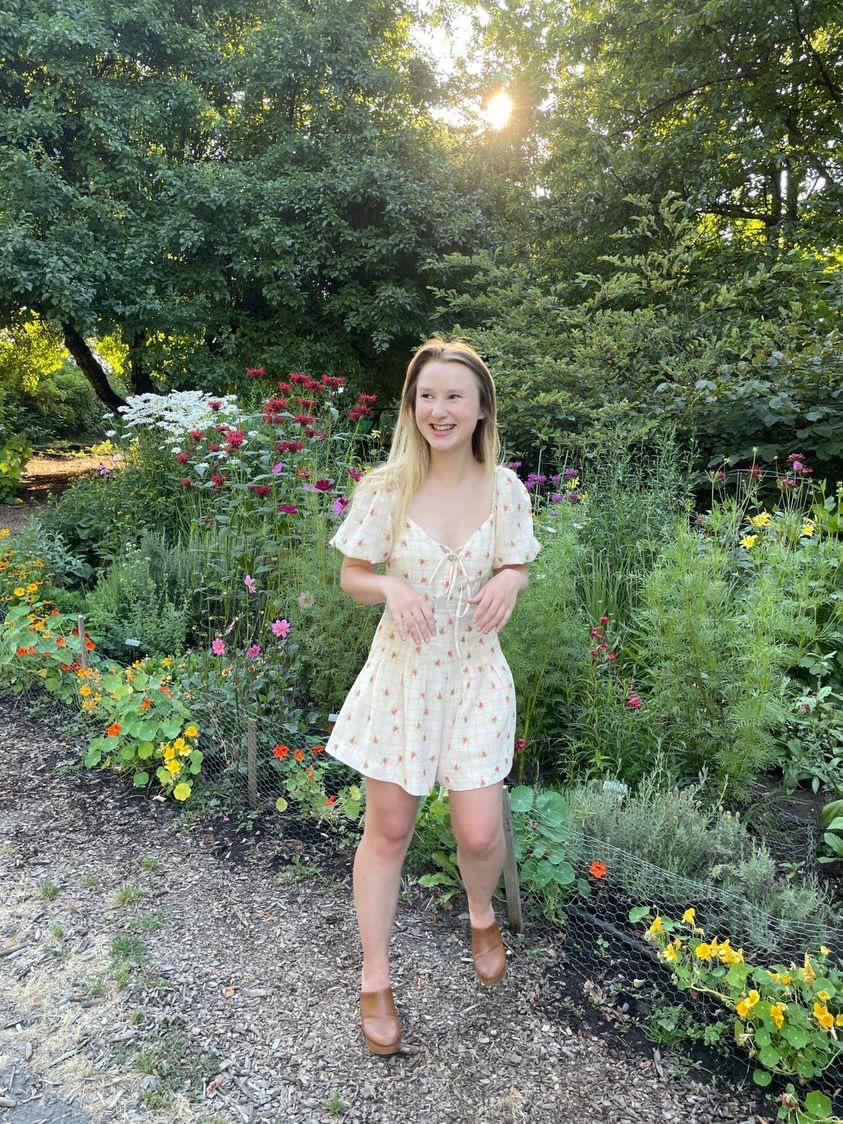
“I don’t think people talk enough about how scary it is to choose a future,” said Macy Gardyn, a first-year COCC student. “Especially when it feels like everyone else already has.”
Uncertainty does not start in college. The pressure to define a future often begins much earlier. Even young children are asked what they want to be when they grow up, long before they have the emotional or cognitive capacity to understand the weight of the question. For some, this expectation slowly grows into a quiet, persistent pressure to choose a path in early life.
Gardyn recalled feeling that pressure as early as age ten, long before she had the emotional or cognitive space to process it, particularly around the pursuit of nursing, a career that carried with it ideas of stability, respectability, and security within both her family and the broader cultural context.
“I was so young, but it already felt like the world expected me to have my life figured out … I didn’t know who I was yet, and I was already failing,” Gardyn said
As she progressed academically, the pressure intensified, transforming educational struggle into existential fear. Difficulty in class no longer represented a need for support or adjustment, but instead evidence that the future she was working toward might collapse.
“I struggled a lot with anatomy. It was not just the class itself, it was the weight of what it would mean if I did not do well, the fear of letting everyone down, and feeling like I was not enough,” she said.
A fellow COCC Student, Isabella Snyder described uncertainty not as chaos or crisis, but as a persistent sense of drifting. She described it as, “I have never really felt settled; there has never been one thing that made me feel like I truly belonged. It is like I am always falling behind, always missing something everyone else seems to have, and it leaves me feeling small and exhausted.”
Art was always present in Snyder’s life, but she resisted framing it as a career path in the conventional sense; “If I made it my profession, it would feel like competition instead of joy,” she said.
Synder’s upbringing in a rural area reinforced the belief that there was only one acceptable version of success, and limited exposure to alternative ways of living narrowed her imagination of what adulthood could look like. But when she traveled to Spain through the Barcelona Study Abroad Experience program from September to December, she encountered unfamiliar cultural and social contexts that marked a clear departure from her prior surroundings and experiences. For the first time, she realized that life did not have to be a straight path, that success could take many shapes, and that her identity was not fixed by where she came from.
“It opened my eyes to how much more is possible beyond what I’ve always known,” she said.
Access to different cultural contexts expands what individuals believe is possible, while isolation often constrains it. What appears as personal uncertainty is often the result of structural limitations.
The COVID‑19 pandemic disrupted students’ developmental milestones, fractured social bonds, and destabilized the connection between effort and outcome, as anxiety, depression, and difficulties in social and emotional development increased.
COCC student Nena Geigel described how the sudden absence of structure during her teenage years created habits and patterns that were difficult to undo. Without the physical separation between school and home, it became harder to focus and stay motivated. Over time, these behaviors turned into habits. Irregular sleep patterns, lower productivity, and fewer social interactions became the norm for her, making it challenging to return to a structured environment. “That sense of being relaxed turned into bad habits,” Geigel said.
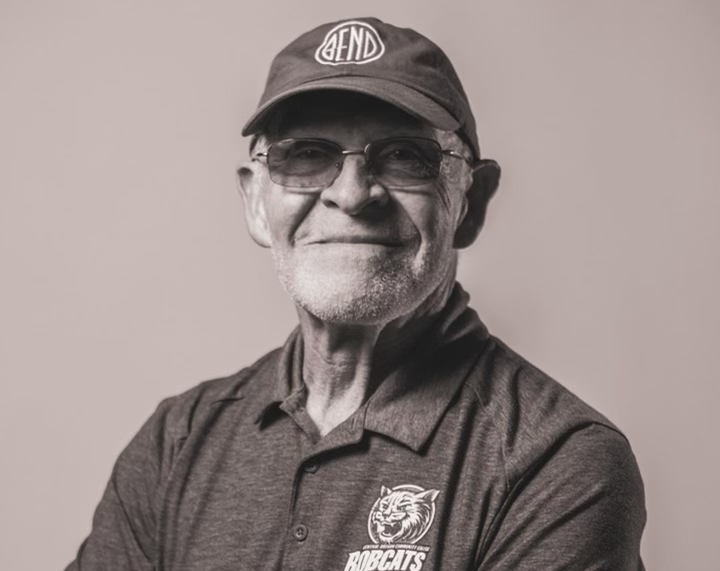
For professors, uncertainty manifested differently but remained just as present. Jared Miller, assistant professor of psychology at COCC, reflected on his time working at a school in Houston, Texas, that shut down for over a year after Hurricane Harvey, an experience that later echoed during the pandemic. He explained the personal impact of such disruptions: “When everything stops, you are left alone with your thoughts.”
He noted that as an introvert, the isolation brought on by COVID deepened an already inward way of living, making withdrawal feel less like a choice and more like a trap. That solitude, particularly for introverted individuals, amplified anxiety. Despite occupying positions of authority, professors described the same internal questioning that students assume disappears with age.
“I still don’t feel grown up,” Miller said. “And honestly, nobody truly does.”
Nikki Truscelli, assistant professor of communication at COCC, emphasized that her undergraduate years were marked by intense uncertainty and shaped by the belief that choosing a major meant choosing an identity permanently. Even after finding academic alignment, imposter syndrome persisted, particularly during moments of growth and first experiences.“That mindset doesn’t allow you to grow your full self.”
COCC staff and students alike rallied behind an approach different from what’s come before. As Miller described it, a place where students and teachers are allowed to exist as “real humans” rather than in roles.
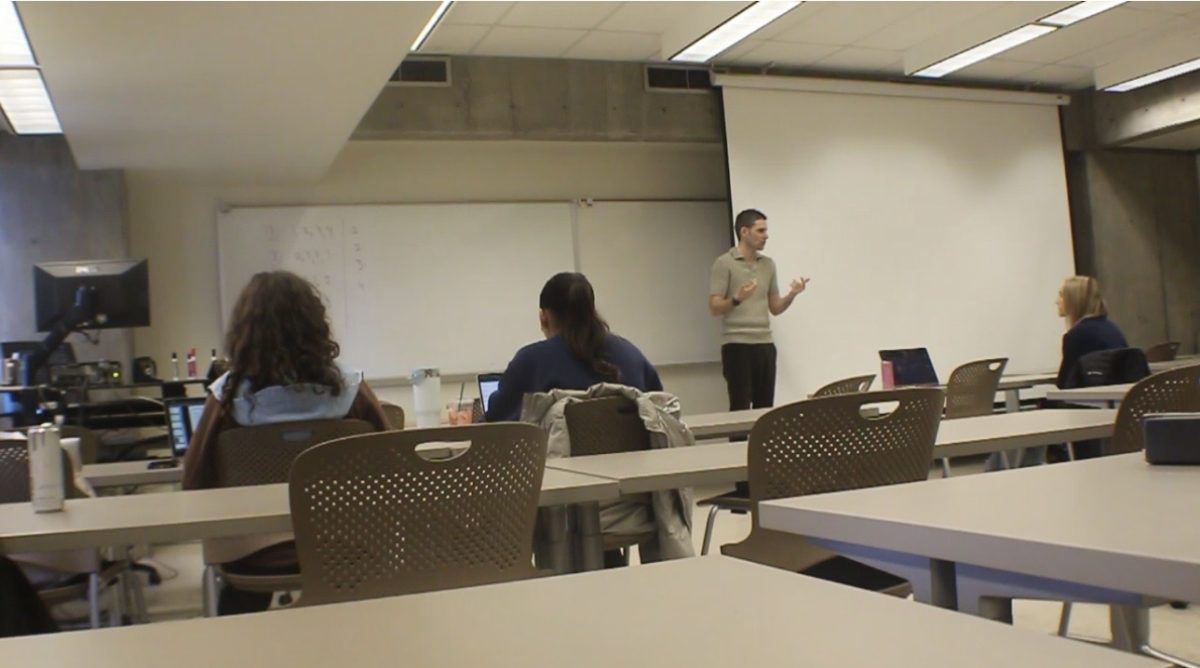
While students often feel pressure to have their futures mapped out early, many COCC professors describe their own educational and professional paths as nonlinear, shaped by shifts in interest, uncertainty, and growth over time. Development doesn’t end with graduation or a degree. Instead, COCC classrooms show that learning continues across generations, with instructors and students evolving alongside one another.
“I used to stress over picking the ‘right’ major and having everything figured out,” said Geigel. “Seeing my professors talk about their own doubts made me realize it’s okay not to have all the answers, and that growth really is a lifelong process.”
Uncertainty is shared amongst both groups, as experience and age do not necessarily eliminate either, and both are connected by the processes of learning, change, and adaptation.
For students, seeing professors openly acknowledge change reframes that uncertainty as a natural part of progress rather than a personal failure. Within this environment, it becomes less of a barrier and more of a space for exploration, reinforcing the idea that at COCC, growth is constant in every lifetime.