















































I’ve thought about this many times in the year-plus I’ve spent here. Every time I scan a bulletin board there’s a new club notice, sometimes similar to an already existing club. A Tabletop Gaming Club exists, but so do D&D, Pokémon, and Minecraft clubs.
19 clubs are currently active and five more are in the act of becoming official–the number continues to grow. Or does it? Because though I often see new flyers it’s rare to see new clubs take place. So I wanted to investigate if there is a club-fatigue that influences retention, lifespan, and overall attention on up and coming clubs.
I began with Talia Stockwell, president of the Associated Students of Central Oregon Community College. They were quick to assert that there’s not enough clubs on campus, and that they–alongside ASCOCC–are actively working toward fostering more clubs. One such approach is a low barrier for entry. Three other people and an advisor is all that’s needed to start, and though there’s supposed to be a minimum number of meetings, three, that’s not always followed.
Stockwell justified this:
“During COVID all of our clubs shut down. So it’s been kind of a getting back to where we have been, with kind of a slow process, since no one really was making clubs in 2021 or 2022. So a lot of the way we treat clubs has gotten very softer.”
They said this lack of consequence has resulted in more paperwork and logistical headaches on ASCOCC’s end, but nothing more consequential. They said it’s worth it.
Stockwell acknowledged their bias toward clubs and cited personal experiences in which some of their longtime friendships have been formed via club involvement. They added the importance of potential to involve community and make new friends.
Stockwell has been president since last fall and a part of ASCOCC for a year and a half. During that time they noted a “documented trend” of clubs that last two meetings at most before they fizzle out. From the fall term until now Stockwell estimated five to six clubs line that trend.
They explained that part of the reason clubs fail to launch is that more specific clubs lack public interest, along with not realizing prior the amount of work that goes into actively running a club. Clubs also fail to sustain themselves when they lack good transition of leadership, they added.
Stockwell agreed with the notion of bulletin boards being overcrowded and that there “definitely should be” a more efficient way to promote clubs. “There’s not really any incentive to look, especially when the (flyers) are not really relevant …. (the boards are) rendered mildly useless by the amount of stuff that just is there forever,” they said.
They admitted that ASCOCC is part of “the problem” of so many on campus clubs. Stockwell is president of three different clubs and a soon-to-be-established club, Minecraft Club, is largely founded by other members of ASCOCC. Other members have helped one another establish other clubs, Stockwell added.
“We really love our clubs at ASCOCC,” they said.
I then spoke with Assistant Director of Student Engagement, Lindsay Buccafurni. She agreed with Stockwell on the need for more clubs and added that, “One of the important things about a large number of clubs is that we’re going to have just more diversity and more representation for our students.”
She began with listing out inherent problems that come with club management in a community college rather than university. Students are busier with more on their plate and in a contemporary setting that is optimal for two years rather than four. This means a higher turnover of students and, by extension, club leadership. Buccafurni said that’s one of the elements detrimental to a club’s lifespan and retention.
Another issue is that students’ business makes convincing them of the “buy-in value” of extracurriculars more of an uphill battle. Buccafurni has worked in student engagement at COCC for more than a decade, since 2013, and gave a wide-lensed view of how things used to be.
It was the tail-end of peak enrollment with much more student engagement across clubs, campus events, and even the student publication you’re currently holding in your hands; a biweekly print publication. Both Stockwell and Buccafurni conceded to COVID-19 having a major impact on all extracurriculars.
“We had to rebuild student government and clubs,” she explained.
In the 12 years Buccafurni’s been at COCC she estimated that only 8 or 9 clubs have been consistent; about half the ongoing 17 clubs. The strongest clubs have been either tied to dedicated staff members or preexisting academic programs–Latinx Club and early childhood education come to mind.
Buccafurni said that bulletin boards are a campus-wide issue and that the range and sheer volume of people who want to share information with students–community members, staff, fellow students, is staggering. She likened the issue of collecting out-of-date posters across various staff buildings to a game of nose goes: whose responsibility does it become?
To get a full grasp of available clubs on campus I spoke with the interim replacement of Assistant Director Club and Intramural Sports Jacob Swinn: Zoey Foote. She delineated the difference between the two: sports clubs are official and intramural clubs are not. The former is headed up by an official coach and the team participates in organized matches. The latter is informal and headed up by not just COCC students but community members and OSU students.
With regards to clubs, Foote explained how the Climbing Club started off with one person but ballooned after getting the needed amount of people, and how a women’s rugby club is in the works but not yet finalized–she also thinks there should be more club sports.
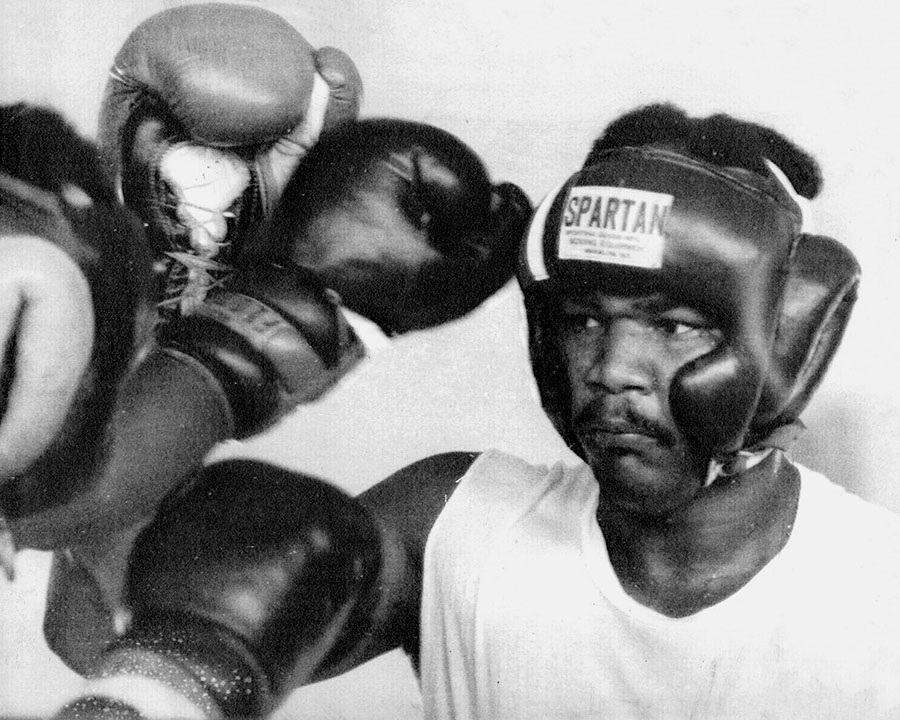
I asked her about the logistics of safety for some clubs that popped up in the past–boxing and trap shooting respectively. She said a liability waiver needs to be signed before proceeding and although trap shooting is still in the works of being officialized by higher-ups, boxing is supervised and headed up by experienced students trying to teach others.
“Our first step to forming a sport club is when we see that there’s enough people, like, motivated and interested to want to launch it. Because it’s hard to form a club without having enough people and vice versa,” Foot explained.
She encouraged students to be involved and utilize the opportunities found at Mazama, which can prove beneficial for students’ mental and physical health.
I at last turned my attention to the study body, the heart of any club. Of the dozen-plus students I spoke with, most of them first-years staying at Wickiup Hall, several of them cited time constraints as reason for not joining. Others cited a lack of interest, or lack of their specific interest.
Ashlyn Preussner wished she had a desire to join clubs but doesn’t have the time; “I’m taking 16 credits and I’m a working woman.”
Bodhi Carez said if there was a robotics or engineering club he’d be more inclined to be a part of one. Danny Wyant explained how none of the current clubs align with his interests.
Emma Macori, a first year student, highlighted the social aspect of clubs. “None of my friends are involved in clubs… I don’t want to go alone.”
The few students interviewed that are actively in clubs gave positive reviews for the Aviation Club, Culinary Club, and Cru respectively. Cal Eckert, of the Culinary Club, has been happy with his experience and that even though it collides with his work schedule it’s worth it, especially for other culinary students.
Vivian Martin highlighted how Aviation Club is more event oriented–guest speakers and movie nights were hosted previously. She said this works to the club’s benefit as they’re a tight-knit group. She added that the club being built into her major of aviation is why she’s a part of it. Martin said, “(It’s) definitely fun and worth it.”
I asked Buccafurni about her concerns over the possible pedantry that is clubs with overlapping interests.
“What harm is there in having all of those options?” was her response. Touché.