




























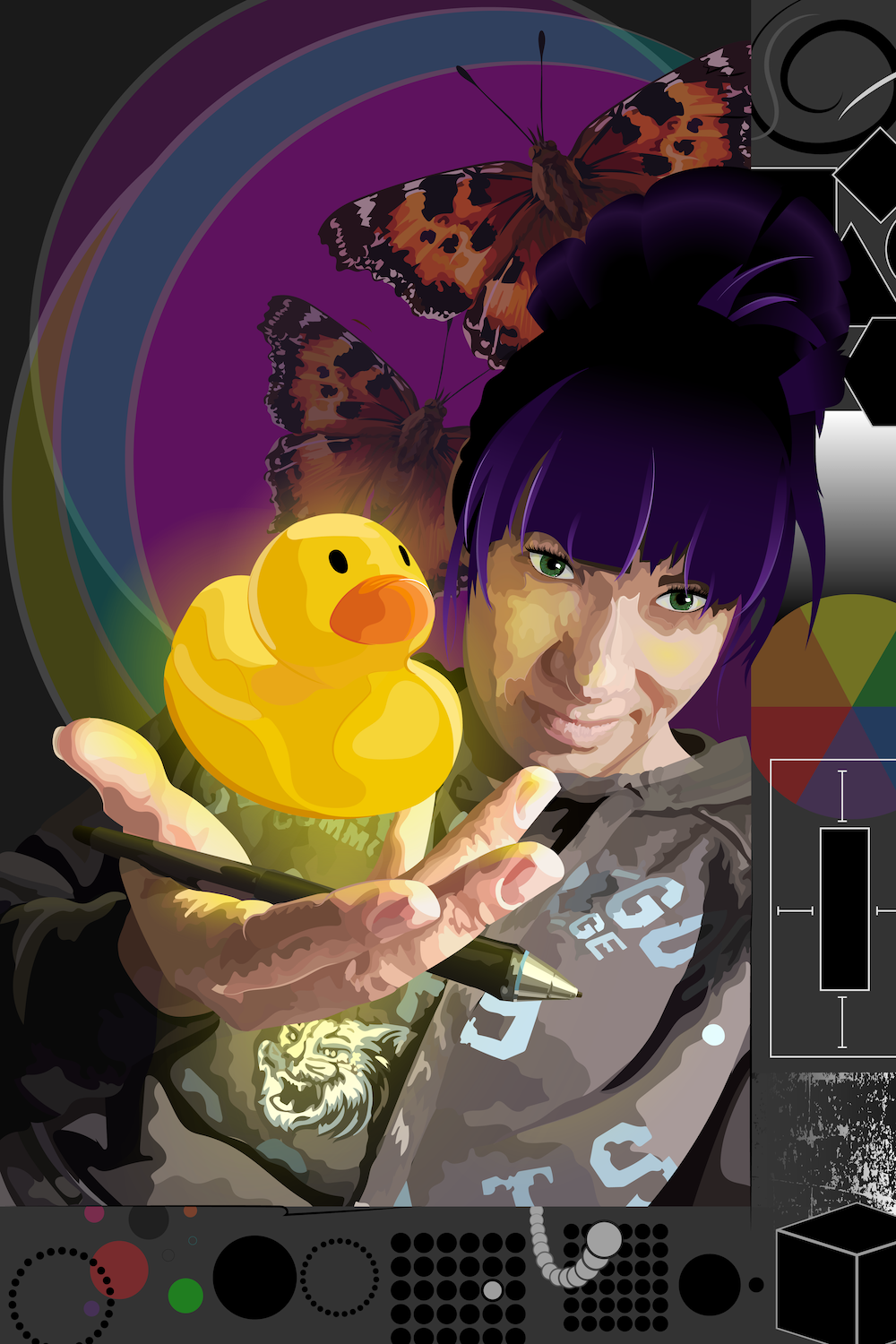
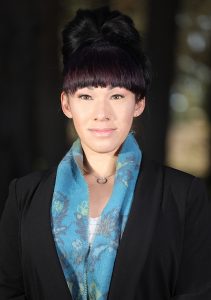
Venus Nguyen, an art program director and assistant professor at Central Oregon Community College, shares about her journey becoming a professor, personality, and advice for aspiring art students.
The Broadside: Tell me a little bit about your journey as an artist and how you ended up at COCC. Was this a long-term goal for you, or did you not plan on becoming a professor?
Venus Nguyen: “I did not plan on becoming a professor. I pursued my athletics (in college). I was taking art classes there, but still, no one really clarified what kind of job there was to go into. (After college) I had gone to take a (community college) class… the digital illustration class, which I already knew how to do. The instructor was going on sabbatical, she said, ‘You can fill in for me.’ So I did. I asked the students there, ‘What are you going to do with your degree?’ They said, We don’t know. It’s been over 20 years since… and still people hadn’t figured out how to make money in art… that’s what I want to do, is go back to school to teach creatives how to make money.”
TB: What should your students know about your personality, teaching style, or classes before joining?
VN: “I teach design, so I better know how to do design and have that shown. I like that students have time to work on their pieces, and something I have learned, especially with career technical education, is that we need to build a lot of support, even though people would think art doesn’t need an instructional assistant.”
TB: What has been your proudest moment as a professor at COCC?
VN: “COCC was very traditional art-focused when I got here, and I was tasked with building career technical education in art. This is my sixth year; in that time, we’ve been able to build four one-year certificates of completion, and bump our enrollment up to something that was fairly minimal to being a top 10 program in the college, and that’s pretty exciting.”
TB: What is your favorite medium of art and why?
VN: “I love watercolor. I wish I had more time to do watercolor and character illustration in traditional media, like blue-line pencil with inking. I would love to do more of that. I tend to work mostly with digital media.”
TB: What role does experimentation or failure play in your creative process?
VN: “I wouldn’t call it failure so much as I have never finished a piece in my mind. Deadlines are what make something be done for me. I tend to work for other folks, like a concept writer, and so there will be a lot of iterations. There are a lot of folks who see failures there, but it’s learning.”
TB: Do you have an all-time favorite artist?
VN: “Not really….Because there’s value in everything. I do really appreciate the work of something. I feel like I’m a chameleon, and I can make almost anything. As somebody who did conservation or restoration, you have to be able to know a little bit about every medium. I really appreciate things that there is no way I could ever come up with.”
TB: Where do you see art education heading in the next decade?
VN: “I feel that art education is moving towards career technical education. We have speakers come in[to art design careers class], and we ask them, ‘Is it important to you that students have a bachelor’s or master’s degree in fine art?’ They say never; it’s always, ‘What does your portfolio look like? Do you have good employability skills, as well as if it’s digital, do you understand software?’”
TB: Any comment on AI (artificial intelligence) within the art community?
VN: “As for AI, it doesn’t do text (to image) very well, yet, it’ll probably figure it out. But AI is a tool like anything else is; I’m sure math folks were scared of the calculator when the calculator came out. I do get a little concerned about prompt generating as a concept artist. If I work with a concept writer, and they put that same prompt into AI, and if I put the prompt in, would it lead me in a different direction than I would have gone by not using an AI prompt, by doing my own research around each individual subject matter?”
TB: If you could give any advice to an inspiring artist, what would you say to them?
VN: “Ask a lot of questions and don’t give up on art as a career, if that’s what you really want to do. I hope everybody gets to have a solo show in New York somewhere, but in the meantime, there are other ways to make money and still be creative. Business cards and coupons will pay your rent while you’re doing that. Don’t be close-minded to the other forms of creation, though. Nothing replaces the traditional; you still need 2D design, you still need colors, you still need drawing, you still need three-dimensional design. All of that stuff applies whether or not you’re working with digital art.”
TB: How do you see your role as an artist and professor influencing the local community at COCC and beyond?
VN: “One of the things that I really focus on is outreach. I go into classes and talk about creative pathways. There are so many ways to collaborate, but students aren’t going to know where to make those connections. That is my job as program director is to build those connections and those bridges between all these different departments. I was able to do that with quite a few of our students over the last few years, creating logos for the first nations club, photo shoots for sustainability, and for their electric vehicles.”