





























































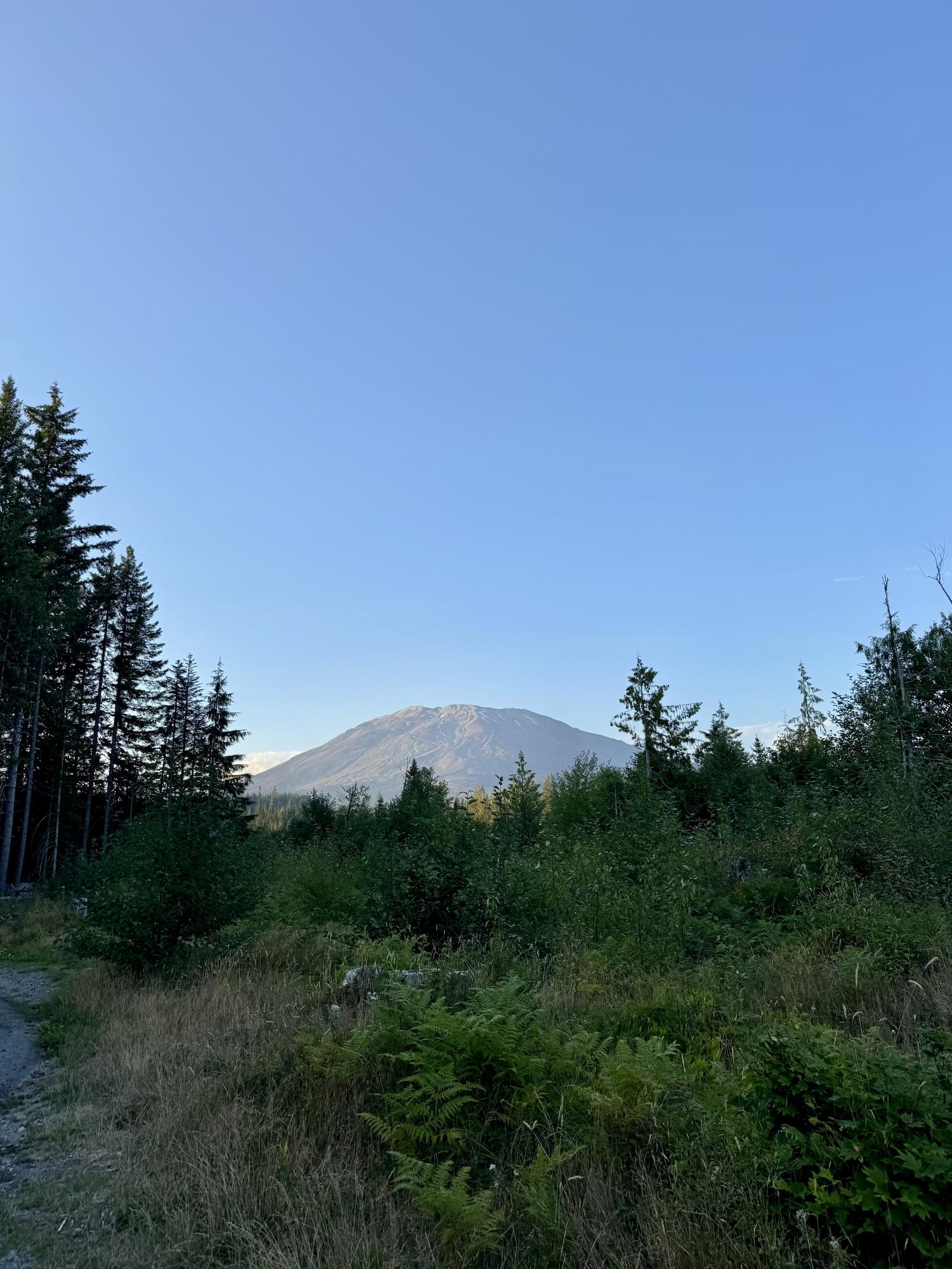
Mount Saint Helens is one of the most well-known peaks in Washington, other than Mount Rainier, not because of its size or its look, but because of its interesting history. On May 18, 1980, there was a catastrophic eruption that had a volcanic explosivity index of 5; the scale goes up to 8. During this eruption, over 1,300 feet of the summit was removed after the north face of the mountain collapsed and slid away; the summit elevation dropped from 9,677 feet to 8,364 feet. Even though this volcano is still active today, people still climb the peak all year round and can get incredible views of the Cascade Range and the massive crater that was left behind.
Climbers who have an interest in summiting the peak can go either in the summer or during the winter. However, the summer route is usually more popular because it is less technical and there is less danger for hazards like avalanches. This year, I was able to climb it both in late August and in late April, so I got to experience two entirely different climbing adventures and routes.
The summer route is essentially a long, non-technical and strenuous hike that covers 10 miles round-trip with about 4,600 feet of elevation gain. The trail starts off at the Climbers Bivouac where you can park your car. The first 2.1 miles of the trail go through a dense second-growth forest along the Ptarmigan (taar-muh-gan) Trail. While on this trail, you gain about 1,000 feet of elevation until you reach the Loowit Trail, which goes around the entire mountain. Once you go past the Loowit trail, you must have a climber’s permit, which can be purchased on Recreation.gov. Make sure you come prepared because park rangers are checking between April 1 and October 31.
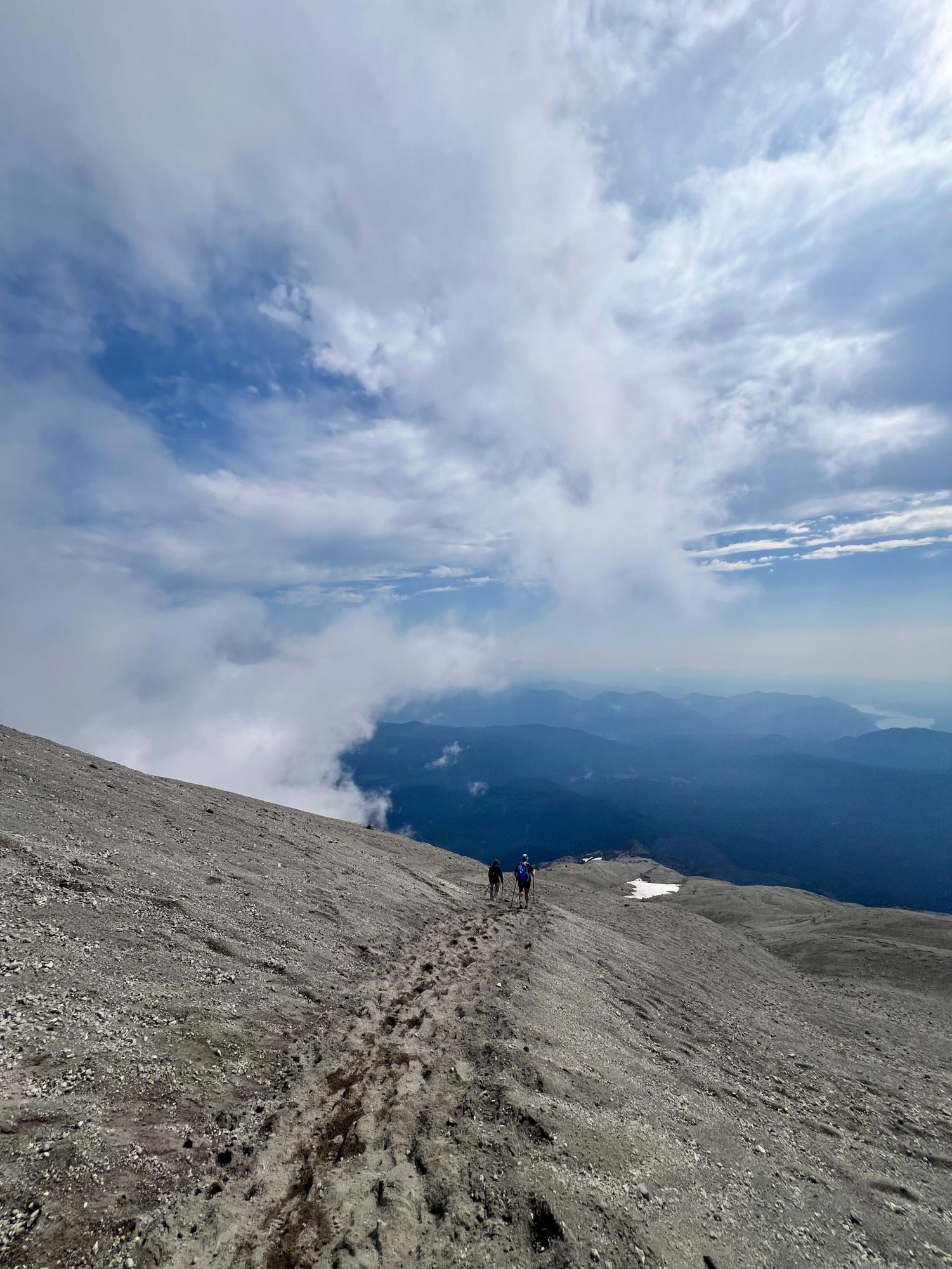
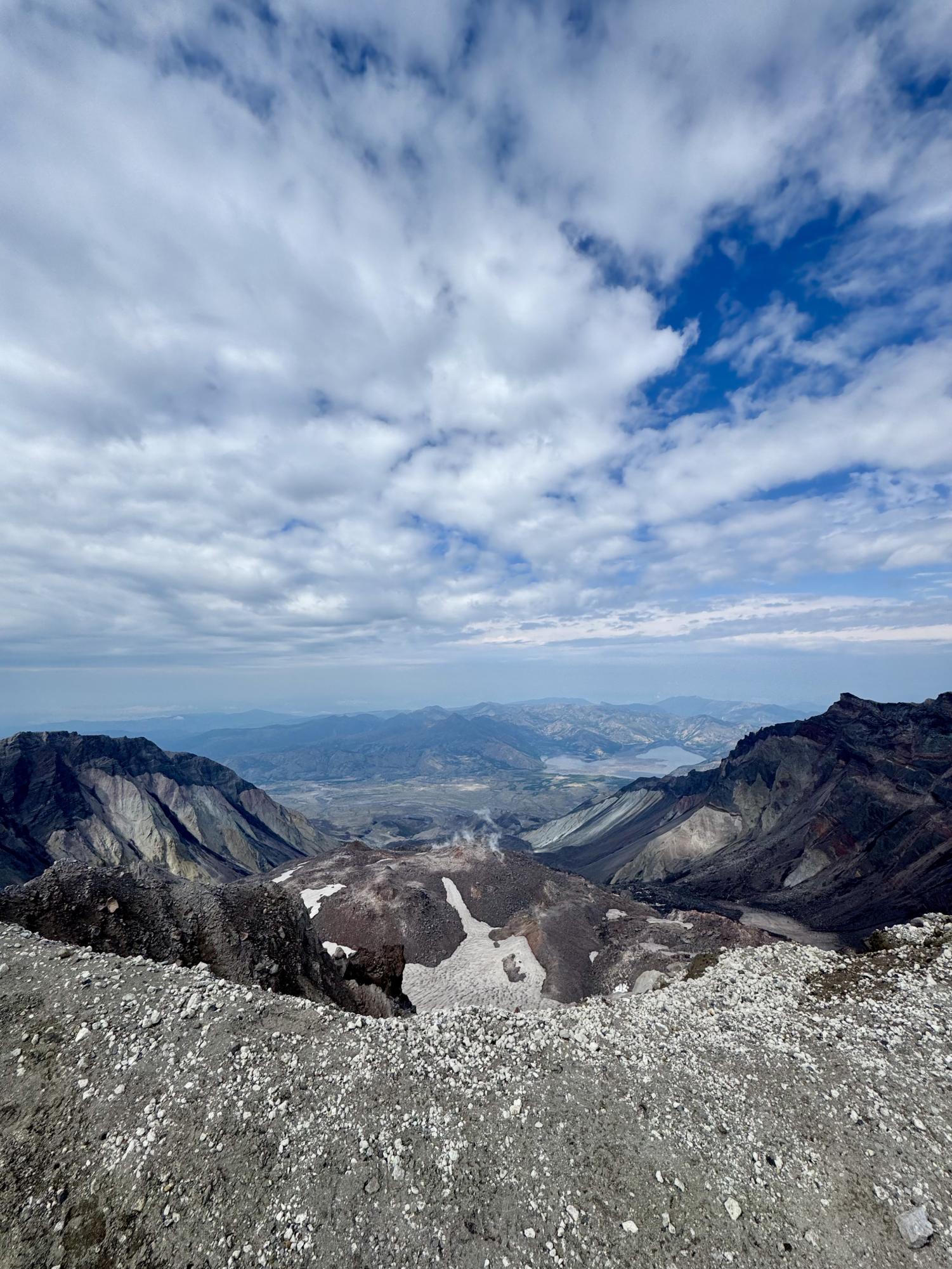
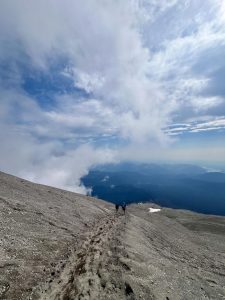
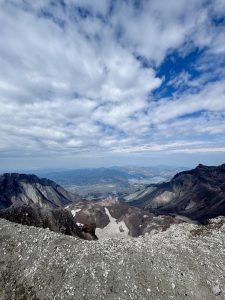
After passing the Loowit Trail, you start to ascend Monitor Ridge, which is a grueling 2,500- foot climb over boulder fields scattered with ash and pumice that is sharp and jagged. If you fall, it would be like falling on a cheese grater. After making it through the boulder fields, the last section of the trail climbs about 1,000 vertical feet to the summit, or the edge of the crater rim. The summit push goes through deep ash and small rocks; it is a pretty long slog and sometimes you feel like you’re taking one step forward and two steps back. Once you reach the summit, you are greeted with panoramic views of Mount Rainier, Mount Adams and Mount Hood as well as a truly insane view of the inside of the crater. Looking down into the crater, you can see steam rising from the huge lava dome and the Crater Glacier.
On the way down, hiking poles are helpful due to the unstable footing. Unfortunately there is almost no snow up there in the late summer, so glissading – sliding down on your backside – is not an option.
Worm Flows in the Winter
If you want more of a mountaineering experience that is still not super technical, climbing St. Helens in the winter months will satisfy that urge. The winter route, also known as the Worm Flows route, covers about 12 miles with 5,700 feet of elevation gain. Recommended gear for this route is gaiters, crampons and an ice axe. There are many people who choose to carry their skis and snowboards to the top as well and then ski down from the summit.
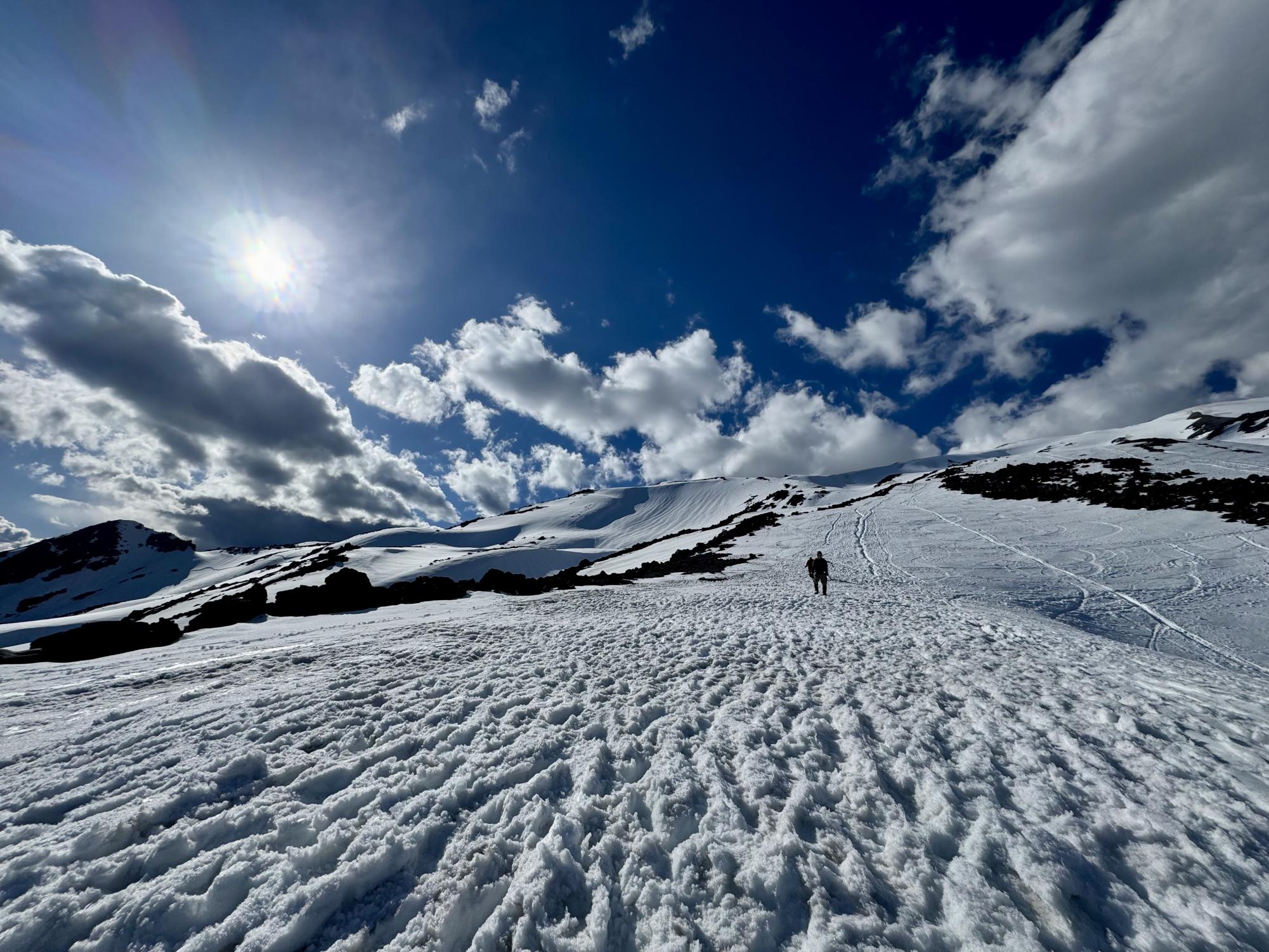
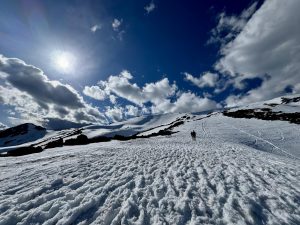
This route starts at the Marble Mountain Sno Park, where you hike through the woods for a little over two miles until you get to Chocolate Falls and above the timberline. From there, it is pretty much a straight line to the summit with many false summits along the way. There is one section early on where you follow a boulder field similar to the ones on the Monitor Ridge route; however, you can avoid it if you go to the side of it through a mini gulley with snow. There is often a clear boot track on the way up, which makes it easier to see where you need to go. There can also be many glissade tracks that run along the boot track.
When I climbed this route in April, some of the sections felt like they were all the same because you were hiking through large open snowfields with a few boulders here and there. Once closer to the summit, there is one steep false summit, which has a 35- or 40- degree slope. After you get past that, you get a chance to see the true summit.
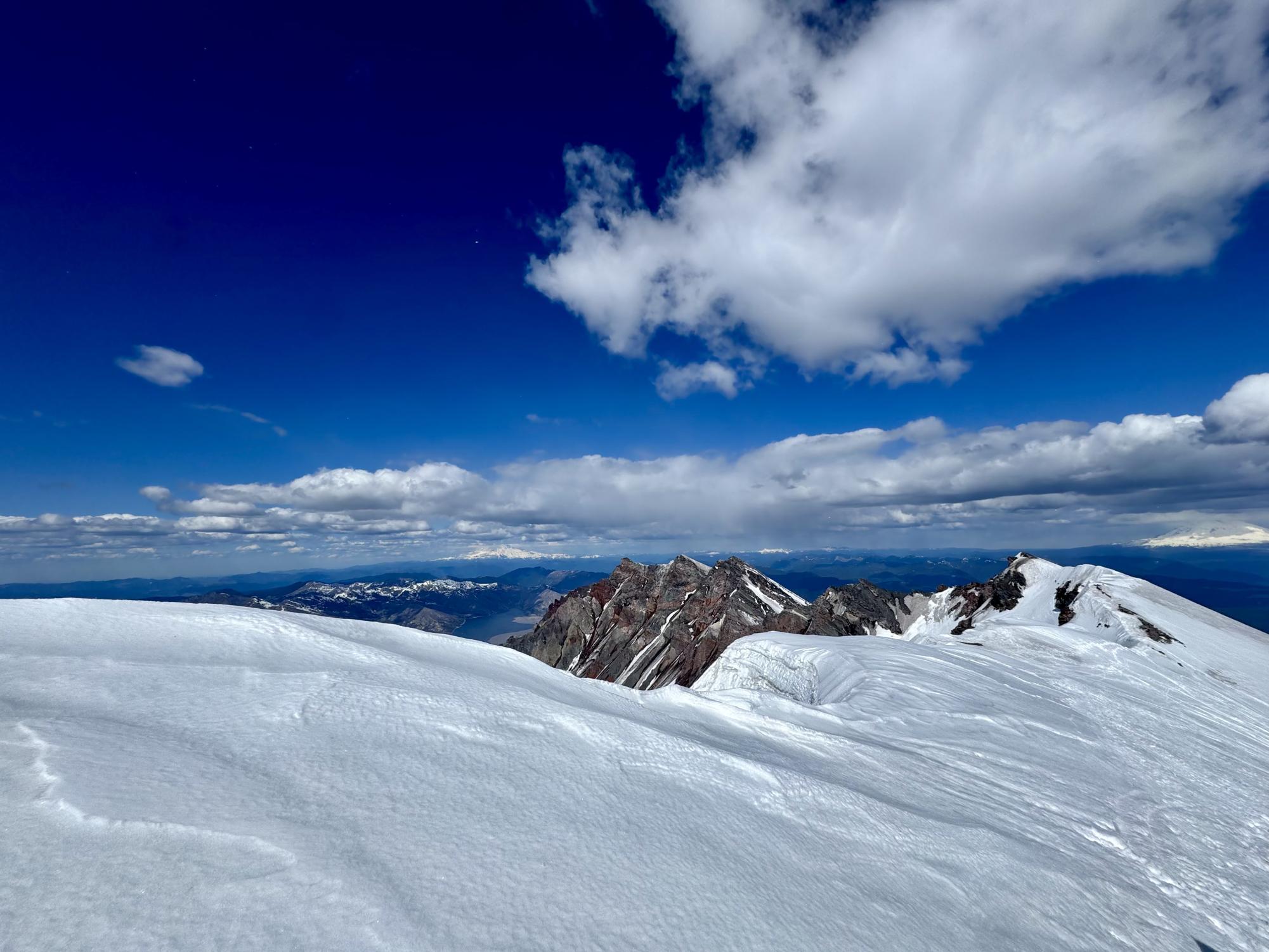
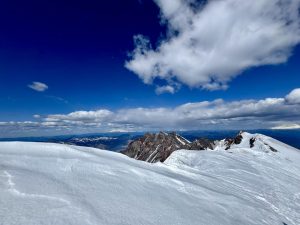
The summit during the winter route offers killer views of the same mountains you can see on the Monitor Ridge way, but the views are always better when the mountains have snow on them. Unlike the summer route, you cannot get close to the crater rim because there is a massive and unstable cornice that is extremely dangerous and could collapse if you get too close. In the past, there have been people who have died after getting too close and falling down the edge of the rim. To help climbers stay back from the edge, orange flags are placed along the rim that mark where the cornice is. Even though you can’t get a view of the crater from the area where the flags are, if you walk either left or right along the rim, you can still get a good look at the side of the crater, which is pretty amazing.
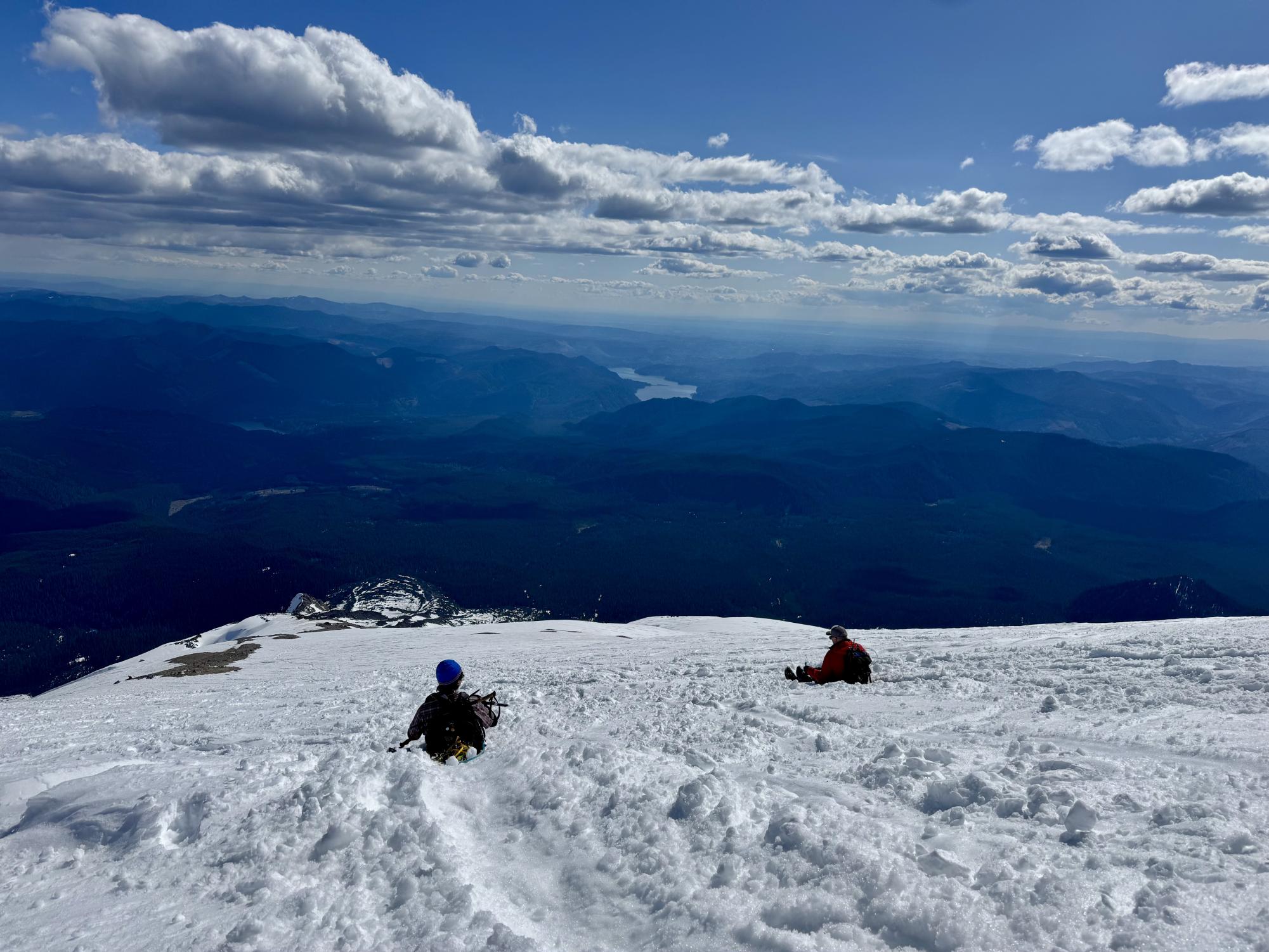
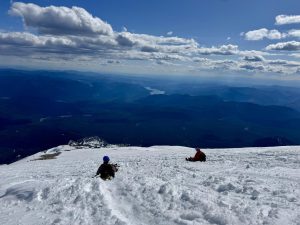
The descent is hands down the best part because you get to glissade almost the entire way. The glissade tracks were long and smooth, and so it felt like you were going down a slide. There were some spots where you had to get out of one track and move to another one to ensure you were going down the right way. Having an ice axe for glissading is essential because it helps control your speed, steer your direction and can be used to self arrest if you start to go too fast or lose control.
Both of these climbing routes deliver an awesome and rewarding view. Many have said that they feel like the Monitor Ridge route is easier than the Worm Flows route, but to me the Worm Flows route felt much easier because you did not have to climb over endless boulders and walk through deep ash. It was also a great introduction into what real mountaineering is like without super technical climbing or dangerous conditions. While both routes have their pros and cons, it’s safe to say that climbing Mount Saint Helens is truly an adventure.
