











































“Roll call!” Shit.
I snapped to the end of my bed and stood in the position of attention. Arms to my sides, thumbs pointed down, touching the seams of my uniform pants, head straight, eyes forward. Basic Military Training runs on precision. There’s a right way to stand, a right way to speak, a right way to exist in the room. Every movement is practiced until your body performs it automatically.
I waited for my name to be called so I could shout, “Here, sir!”
“Nu… Nug… Guy…” My Military Training Instructor squinted at the roster, then looked up at the name tape stitched above my pocket. “Trainee, is this you?” he asked, pointing at the paper.
“Yes, sir!”
For a second, I thought he might ask how to pronounce it. Instead, he moved on to the next name without trying again. He didn’t ask. He didn’t attempt it. He just skipped over the name entirely and continued down the list.
At least now I knew I could fly under the radar.
In Basic Training, that can feel like a skill. I managed to stay mostly invisible for the rest of BMT. I was rarely the one getting yelled at. Usually, I stood in formation watching someone else get yelled at or watching the person doing the yelling. Everyone moved together. Matching uniforms, matching haircuts, matching steps across the pavement during drills. First names disappeared quickly. We became last names shouted across dorms and training fields.
Except mine was rarely shouted.
Nguyen sat awkwardly on rosters and name tapes, a cluster of letters that stalled instructors mid-sentence. Sometimes they attempted it. Sometimes they pointed instead. Sometimes they skipped it entirely. And I didn’t mind. If being hard to pronounce meant being left alone, that was fine by me.
The invisibility followed me through the next five and a half years of my Air Force career. The system ran smoothly when everyone did their job, with little to no friction. For the most part, I blended in and did exactly what was expected of me.
When my contract ended and I separated from the service, the transition back to civilian life felt strangely abrupt. Suddenly, people were using first names again.
“Cindy!”
Sometimes I wouldn’t respond right away because I wasn’t used to hearing it. I would hear the voice but not register that it was directed at me. A few seconds later, I would look up and see someone trying to get my attention.
“Huh? Sorry,” I’d say.
It felt like relearning a habit I had forgotten.
Six months after leaving the military, I found myself sitting in a large hotel conference room in Colorado. The room had tall windows that made the mountains look like they were leaning in to watch. Sunlight spilled across the carpeted floor and bounced off the giant projector screens at the front, flickering slightly with each slide. About 150 people sat in neat rows of chairs, shifting and murmuring, trying to look like they belonged. The air smelled faintly of stale coffee, sanitizer, and recycled mountain air from the vents.
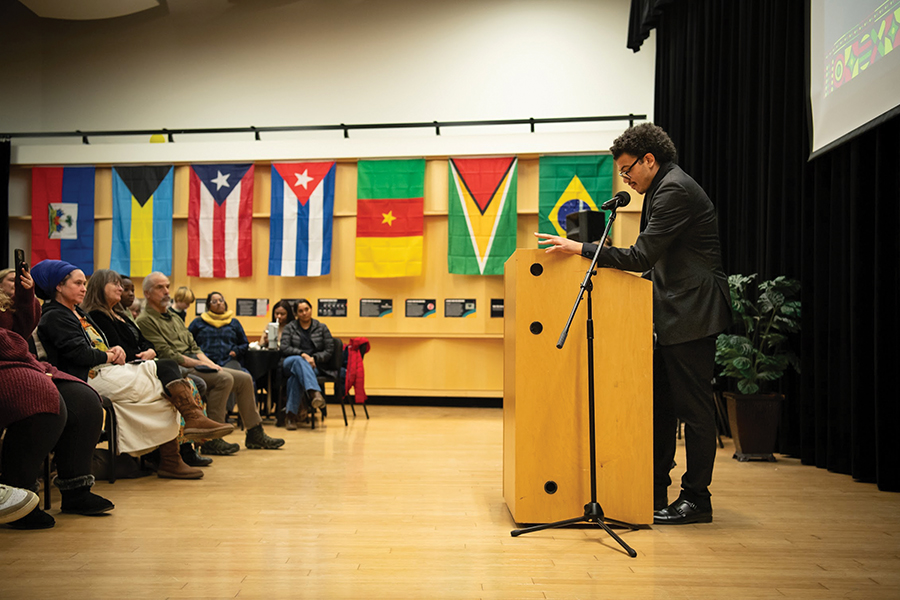
Then the speaker stepped up to the podium.
An indigenous man, JD. His voice carried easily across the room, calm and steady. He spoke about reclaiming heritage. About language, ancestors, and identity. Our names, he explained, carry our people. Every syllable matters. History has a way of sanding names down until they’re easier to pronounce, easier to control, easier to forget.
I remember thinking, Damn. I do that with my name.
Legally, I am Cindy. Clean. Efficient. Familiar. No one panics when they see Cindy on a roster. Teachers don’t squint. Starbucks baristas don’t ask follow-up questions. Cindy slides into American life without friction. Cindy sounds like she grew up here, like she’s never had to spell her name twice. Cindy is convenient.
At home, though, I’m Lin.
Not Linh, the proper Vietnamese spelling with the soft exhale at the end. Just Lin. Three letters. Streamlined. My parents taught me to spell it that way. Dropping the “h” felt practical, like trimming a loose thread before it could snag on anything.
In Vietnamese, Linh means spirit. Soul. Something sacred and unseen but powerful. It’s the kind of name that belongs in poetry, not government forms. Meanwhile, Cindy belongs to a completely different tradition. Bright, sweet, aggressively American. The kind of name that pairs well with a headband and a fairy tale like Cinderella. One sounds ancestral. The other sounds like she organizes bake sales.
I learned early how to move between them. Cindy raised her hand in classrooms. Lin listened to Vietnamese drifting from the kitchen. Cindy filled out paperwork. Lin existed comfortably inside conversations that didn’t need translating. At the time, it simply felt practical. Why make life harder than it already is?
But sitting in that Colorado conference room, listening to JD talk about names carrying generations of history, I started thinking about it differently. I thought about my parents arriving in America. I thought about paperwork, accents, and survival. I thought about the missing “h” in Lin and wondered if it had quietly sacrificed itself so I could move through rooms more easily.
After the conference, I started introducing myself differently.
“Hi, I’m Lin.”
People blinked. “Wait, I thought it was Cindy?”
For a while, I felt like I had to choose. But the truth is, both names carried pieces of me. Cindy learned how to survive in spaces that reward familiarity. She filled out forms, built resumes, and navigated systems that were never really built with her in mind. Lin carried my parents’ language, their migration, and their resilience. Even without the “h,” she carried spirit.
Eventually, I stopped acting like the names had to compete.
Cindy Lin.
Said together, it feels right. Not dramatic. Not revolutionary. Just honest. An American first name and a Vietnamese last name. Two histories sharing the same breath. In the Air Force, they could call me by my last name. On paperwork, I’ll probably always be Cindy.
But when I introduce myself now, I say the whole thing.
Cindy Lin.